Visit our Location
28936 Old Town Front St.
Suite 106 Temecula, CA 92590

Pink house with a heart cutout window

Give us a Call
(951)223-5587

Pink telephone handset icon on a black background.

Send us a Message
hello@thetaprootchiro.com

Pink envelope icon with black outline.
Abstract pattern with wavy orange lines on a black background.

Pediatric Chiropractor in Temecula, CA

Help Your Child's Brain Blossom Into Full Potential

Taproot Chiropractic provides specialized neurologically-based care for toddlers, preschoolers, school-age children, and teenagers experiencing developmental, behavioral, learning, or health challenges.

Chiropractor wearing a black hoodie with the words 'No bad kids.' written on the back, pointing towards the words on the back of the jacket, against a plain white background.
A chiropractor adjusting a young boy lying on a chiropractic table in a chiropractic office in Temecula, CA.

Your Brilliant Child Is
Struggling—And You're Running Out of Answers

Is your child struggling with focus, behavior, anxiety, or learning challenges? These aren't just "problems to manage"—they're signals. At Taproot Chiropractic, we find the root cause and help your child's brain blossom into its full potential.

You Know Your Child Is
Capable of More

Your child can't focus. Homework that should take 30 minutes becomes a 3-hour battle. They fidget, get distracted, can't sit still. Teachers report constant disruption.

Or they're anxious and overwhelmed. Social situations are hard. New experiences terrify them. Meltdowns over things that seem small to you but feel enormous to them.

Or they're sick constantly. Ear infections, antibiotics, missing school. The cycle never ends.

Or they're labeled "difficult." Behavioral challenges at school and home. Nothing you try seems to help.

A chiropractor performing a leg length check on a patient's legs on a black chiropractic table in a clean, white room.

What if there was
another way?

You've been told:

  • "It's ADHD—try medication"

  • "They'll grow out of it"

  • "Work with this therapist/specialist"

  • "Some kids are just like this"

You feel:

  • Exhausted from advocating everywhere

  • Guilty you can't figure out how to help

  • Frustrated everyone treats symptoms, not causes

  • Heartbroken watching your capable child struggle

  • Desperate for someone who will finally look deeper

What if the real issue isn't behavioral? What if it's neurological—and there's a mismatch between the tools your child has and what's being asked of them?

A young girl with blonde hair in pigtails lying face down on a chiropractic table, with an adult seated in a chair nearby, in a room with wooden flooring.

Common Pediatric Challenges
We Help Address:

Do any of these sound familiar? You're not alone—and there are answers. Schedule your child’s nervous system assessment today and let's get your whole family the rest and peace you deserve.

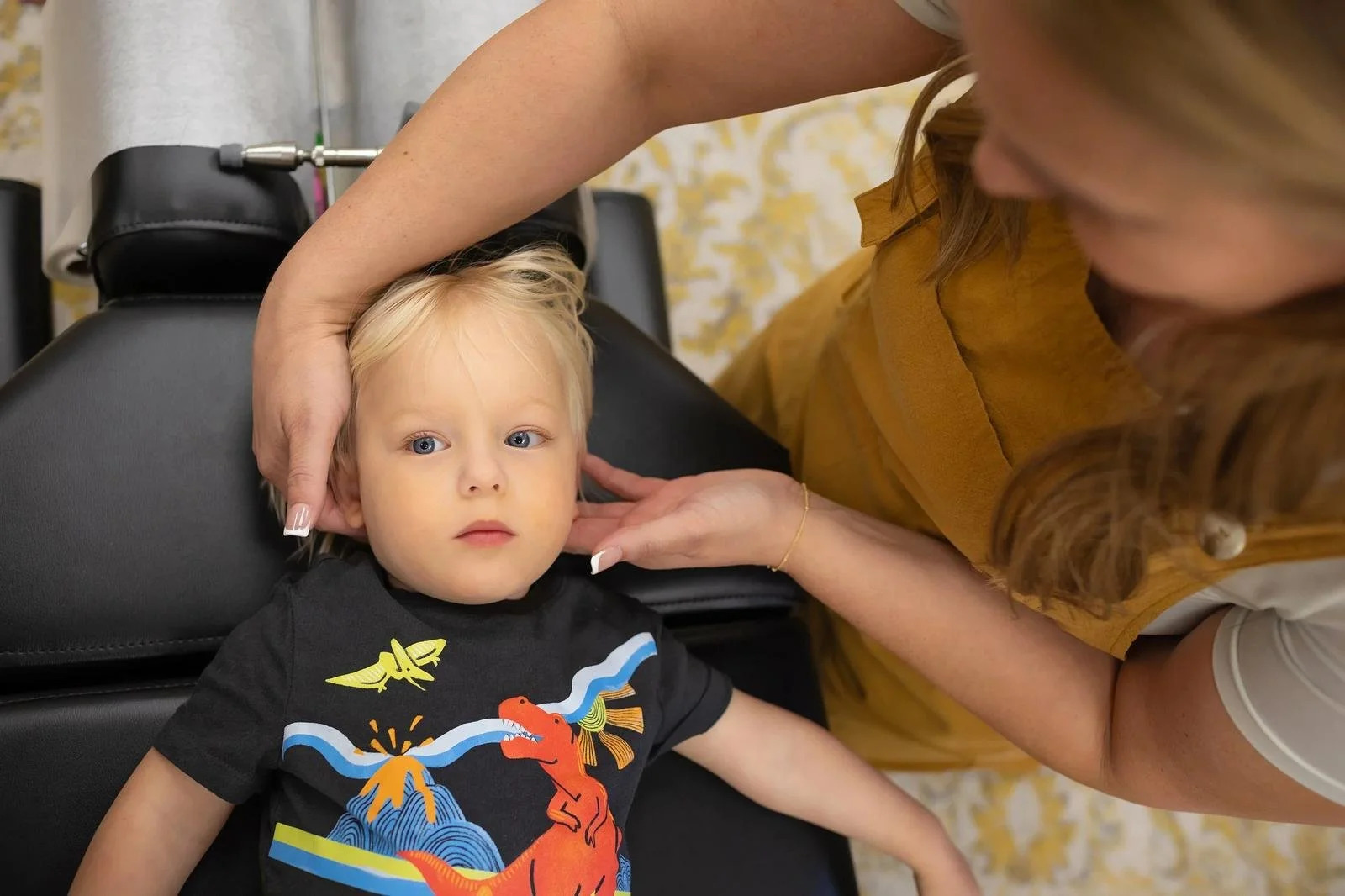
A chiropractor with blonde hair, wearing a white shirt and beige cardigan, gently checking a child's neck during a consultation or examination in a chiropractic office.
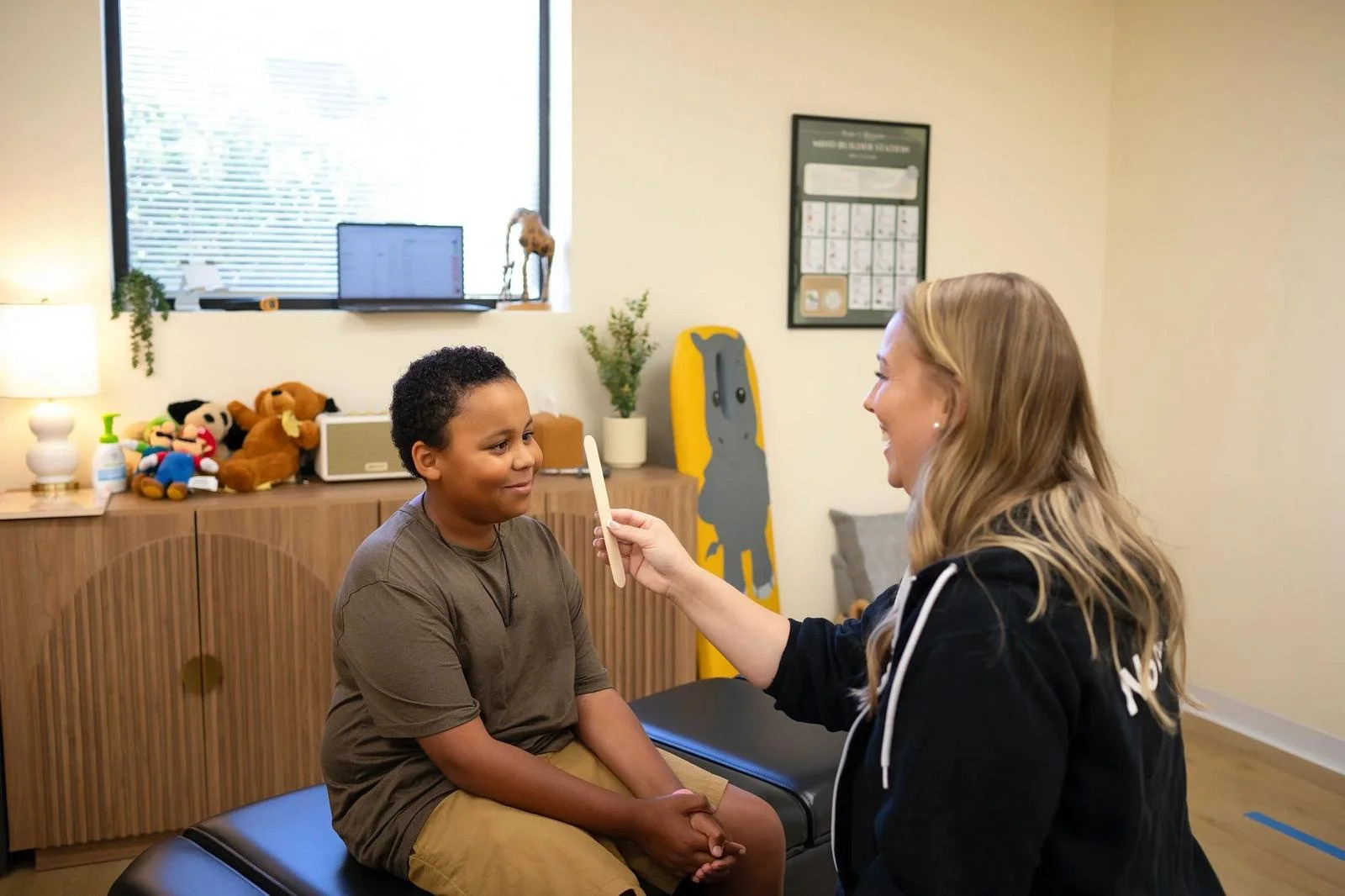
Young child sitting on a black chiropractic table, looking up at the camera, with a chiropractor sitting beside them.

Understanding Your Child's Development

Your Child’s Brain Is Like a Flower Opening
Petal by Petal

Here's What We Know About
How Brains Develop

We know the brain isn't fully developed at birth—or even at age 10.

Your child's brain is like a flower opening petal by petal. Each stage of development builds on the previous one.

We know the brain moves through a specific developmental trajectory.

Just like a flower blooms in stages, brain development follows a path. Skip an early stage, and everything built on top struggles.

We know throughout development, we gain more sophisticated tools.

As each "petal" opens, your child gains tools for:

  • Processing sensory information

  • Regulating emotions and behavior

  • Focusing and learning

  • Communicating and socializing

  • Coordinating movement

A young girl lying on a black chiropractic table while a chiropractor gently checks her neck.

The Mismatch: When Tools
Don't Meet Demands

Here's the critical insight:

When there's a mismatch between the tools your child has and the demands being asked of them, we see deflected behavior.

Examples of mismatch:

A 7-year-old is asked to sit still and focus for 30 minutes.

  • If they have the tool: They can do it

  • If there's a mismatch: Fidgeting, distraction, "ADHD"—not because they're bad, but because they're being asked to use a tool they don't have efficient access to yet

An 8-year-old tries to read fluently.

  • If they have the tools: Reading flows

  • If there's a mismatch: Struggles, avoidance, "learning disability"—because foundational visual or processing tools aren't optimal

A 5-year-old is told "use your words" when frustrated.

  • If they have the tool: They communicate verbally

  • If there's a mismatch: Meltdowns, aggression—the communication tool isn't developed or accessible yet

The behavior isn't the problem. It's the mismatch of tools to meet the demand being asked of them.

And that mismatch often stems from stress that deflected development—keeping petals from opening fully.

A woman with long blonde hair, glasses, and a white shirt, smiling, with three children on a bed, one girl standing behind her and two boys sitting in front, posing for a photo in a home setting.

Stress Impacts Development

We also know stress affects how the brain moves through that trajectory.

Physical stress (birth trauma, injuries), emotional stress, environmental stress—all can deflect the brain from its optimal path.

When stress interrupts development, petals don't open properly. Your child may:

  • Get stuck using less sophisticated tools

  • Skip critical developmental stages

  • Develop compensatory patterns

  • Struggle to access the tools they need

Female chiropractor performing chiropractic adjustment on a young boy lying face down on chiropractic table in a well-lit room.

Our Approach: Help Your
Child's Brain Blossom

We Answer the TWO Questions That Reveal How We Can Help & Where We Should Start

Question 1: How is your child's brain receiving information and handling stress?

  • Are neuro-structural shifts disrupting input?

  • Is the nervous system stuck in stress response?

  • How efficiently is information flowing?

Question 2: Where is your child in development, and what tools are they using?

  • Which developmental hierarchies need support?

  • What's creating the mismatch between tools and demands?

  • Which "petals" haven't opened yet?

Then we create a personalized plan to:

  • Correct neuro-structural shifts (remove physical/neurological stress)

  • Support developmental trajectory (help petals open)

  • Integrate retained reflexes (reduce stress responses)

  • Optimize tool access and efficiency

  • Create conditions for healthy brain development

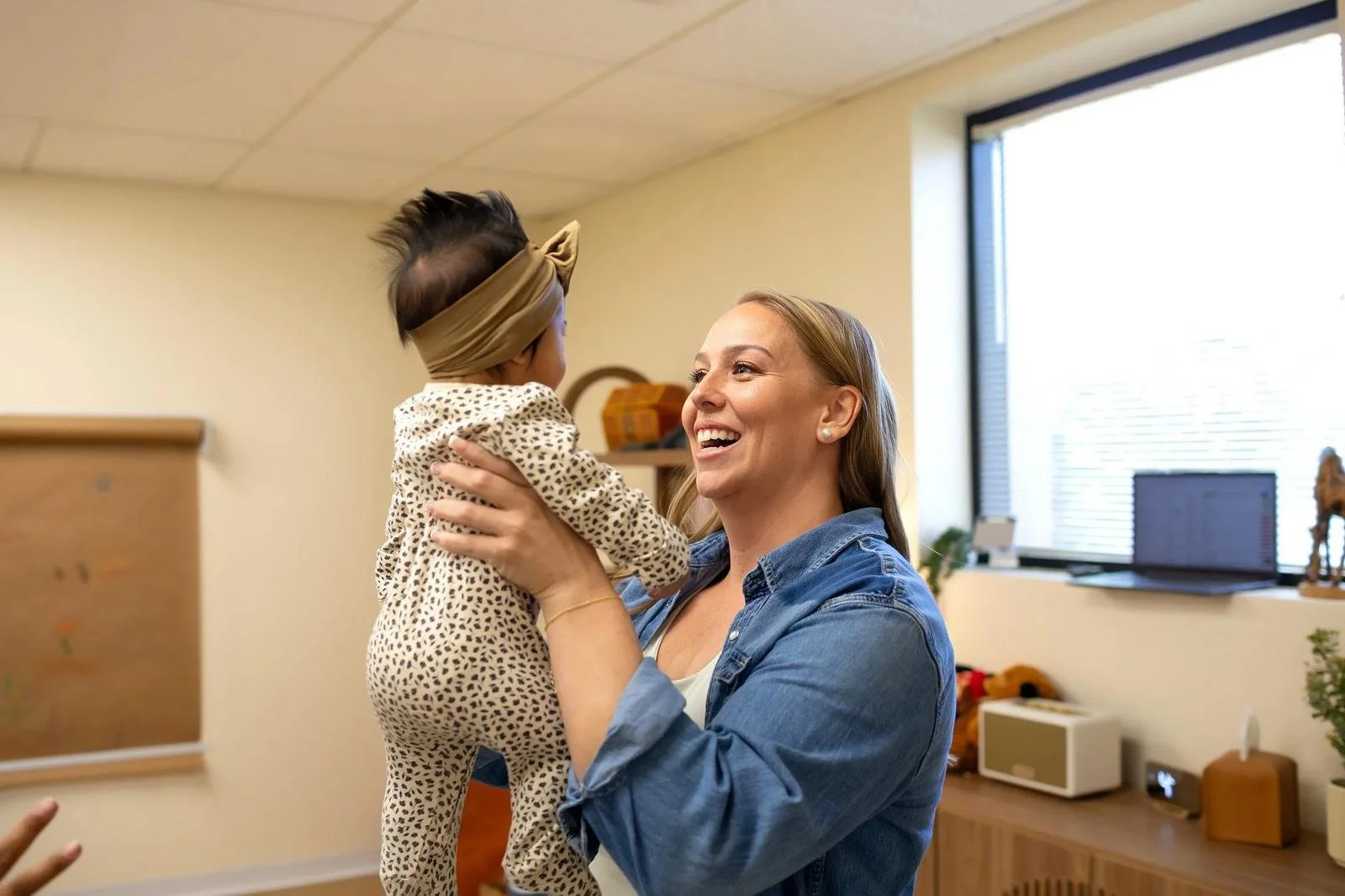
A young girl with a big smile, running and playing in a room with wooden floors, an armchair, and a sofa, with brick wall and window in the background.
A chiropractor with long blonde hair aids a young boy with curly hair on a chiropractic table. The boy is lying down flat on his back while the woman holds his feet. The room is decorated with chiropractic posters hanging on the wall.
A newborn baby with vernix caseosa and skin redness, being held by a medical professional during a birth.

Stress Responses We Address:
What's Deflecting Development

As Chiropractors, we look for stress responses in the brain and body.

One of the most significant: Neuro-Structural Shifting

When the body experiences stress—birth trauma, falls, injuries—bones can shift out of alignment in the spine, cranium, and pelvis.

These neuro-structural shifts create ongoing stress:

  • Disrupting brain-body communication

  • Sending distorted sensory input to the brain

  • Keeping nervous system in chronic stress state

  • Preventing smooth movement through developmental stages

  • Limiting access to tools needed for function

It's like trying to bloom with roots in compacted soil—the flower wants to open, but stressed conditions prevent it.

Young boy standing on a wooden floor, throwing colorful scarves in to the air, with a neutral plain wall background.

What Temecula Parents Report After Starting Neurologically-Based Care

Within the first 8-12 weeks of corrective care, parents often tell us:

Focus & Attention:

  • Homework is less of a battle

  • Can sit still for longer periods

  • Follows multi-step directions better

  • Teachers report improved classroom behavior


Emotional Regulation:

  • Meltdowns are less frequent and less intense

  • Bounces back from frustration more quickly

  • Can handle transitions better

  • Seems happier and more content overall


Physical Health:

  • Fewer sick days and ear infections

  • Better sleep patterns

  • Improved digestion

  • More coordinated movement


Social & Learning:

  • More confident in social situations

  • Reading or learning challenges improve

  • Better sports performance

  • More engaged with peers

Every child is different, and results vary depending on where your child is at in development and their past history. These are common patterns we see when we support the nervous system.

Client Love

Questions? We have answers!

Three children laughing and smiling together, with an overlay of a tablet displaying a free guide for supporting a child's development, titled 'Brain Blossom Play and Connect Guide.'

Download Our Free Play & Connect Guide

Visit our Location
28936 Old Town Front St. Suite 106
Temecula, CA 92590

Pink house with a heart in the center and a chimney on the right side.

Give us a Call
(951)223-5587

Pink telephone receiver icon on a black background.

Send us a Message
hello@thetaprootchiro.com

Pink envelope icon with a black outline on a black background