Visit our Location
28936 Old Town Front St. Suite 106
Temecula, CA 92590

Pink house with a heart in the middle icon.

Give us a Call
(951)525-6566

A pink telephone receiver icon.

Send us a Message
hello@thetaprootchiro.com

Pink envelope icon.

ADHD & Focus
Challenges in Temecula

If homework battles, constant fidgeting, and "not reaching potential" sound familiar, your child's focus challenges might not be about willpower—they're about where they are in brain development.

Discover What's Really Happening →

The Pattern You're Seeing

Does this sound familiar?

Homework that should take 30 minutes stretches into three hours of tears and frustration. Your child's teacher says they're clearly intelligent, but they just can't stay on task. You see them trying—really trying—but it's like watching someone run through water.

Maybe you've started medication and it helps with some things, but something still feels off. The fidgeting continues. The lost backpacks and forgotten assignments keep happening. Your brilliant child seems trapped behind a wall they can't break through.

Other parents talk about kids who sit down and do homework independently. You can't even imagine what that would be like.

You're exhausted. Your child is frustrated. And deep down, you know this isn't about effort or attitude.

You're right. It's not.

Book Free 15 minute consultation

What Most People Miss
About Focus Challenges

Here's what everyone gets wrong about ADHD and focus challenges: they think it's just about brain chemistry or willpower.

But attention, focus, and impulse control aren't character traits your child lacks. They're high-level brain functions that require very specific developmental foundations to work properly.

Think of brain development like building a house. You need a solid foundation before you can add walls. You need walls before you can put on a roof. And you need all of that before you can decorate the interior.

Your child's brain developed in a specific sequence—from the brainstem up through the midbrain and finally to the cortex (the "thinking brain" where attention and focus live). Each level has to be solid before the next level can function well.

Here's the critical part: When earlier developmental stages aren't fully integrated, your child's brain has to keep using "survival-level" tools instead of accessing the higher functions needed for sustained focus.

It's like asking someone to write an essay while they're worried about a tiger in the room. The tiger-awareness brain takes over, and essay-writing becomes nearly impossible.

The Developmental Stages
Most People Don't Know About

Your child's brain had to develop in a specific sequence—like building a house from foundation to roof. You can't skip steps.

Here's the sequence every brain needs for focus:

Level 1: Primitive Reflexes (The Survival Brain)

These are the automatic reflexes babies are born with. They're supposed to turn off as higher brain functions come online.

When they stay active—often from birth stress or missed milestones—your child's nervous system stays partially stuck in survival mode: constant fidgeting, difficulty sitting still, always seeming "on alert."

Bottom line: When primitive reflexes are still running the show, the brain can't fully access higher-level attention.

Level 2: Movement & Touch
(Body Organization)

This is where your child learns where their body is in space and how to move with coordination.

When this level isn't solid: clumsiness, losing things constantly, messy handwriting, difficulty organizing physical materials.

Why this matters for focus: If your child can't organize their physical world, they can't organize their mental world. The same brain regions handle both.

Level 3: Auditory & Verbal Processing
(Making Sense of Sound)

Not just hearing, but making sense of what they hear, sequencing it, remembering it.

When this level is inefficient: asking "what?" constantly, difficulty following directions, losing track of what the teacher said.

This gets misidentified as "not paying attention"—but their brain is working so hard to process sound that there's no bandwidth left for focus.

Level 4: Visual Cognition
(The Thinking Brain)

This is where sustained attention, working memory, planning, and impulse control finally live.

This is where homework and classroom learning happen.

Why Your Smart
Child Can't Focus

Your child's intelligence lives in that top level. That's why you see flashes of brilliance, why teachers say "so smart, but..."

But when earlier levels aren't solid, their brain keeps deflecting down to the tools that work more efficiently—even when those tools aren't appropriate for the task.

It's like trying to write an essay while:

  • Scanning the room for danger (active primitive reflexes)

  • Figuring out where your body is in the chair (movement/touch inefficiency)

  • Straining to understand what was just said (auditory processing challenges)

By the time their brain gets to "now focus on this worksheet," they're exhausted.

This is why behavioral strategies alone often don't work. You're asking your child to access tools they don't have reliable access to yet—not because they're not smart enough, but because the developmental foundations aren't stable.

The intelligence is there. The desire is there.

What's missing is the neurological stability that makes sustained focus possible.

The Two Questions
That Change Everything

When you bring your child to Taproot Chiropractic, we're not guessing. We're measuring and assessing two critical things:

Question 1: Are there inefficiencies in how your child's brain receives, processes, and sends information?

Using INSiGHT neurological scanning technology, we can see exactly where nervous system interference is creating static in your child's brain-body communication.

Think of your child's spine as the superhighway that carries all information between brain and body. When vertebrae are misaligned—from birth positioning, childhood falls, or the physical stress of growing up—it's like having construction zones and traffic jams on that highway.

Information traveling from your child's body to their brain gets scrambled. Commands from their brain to their body get delayed or distorted. The result? A nervous system that can't efficiently support the high-level functions needed for sustained attention.

Our scans reveal:

  • Sympathetic/parasympathetic balance: Is your child's nervous system stuck in "fight or flight" mode, making calm focus impossible?

  • Spinal tension patterns: Where is physical stress interfering with nerve communication?

  • Neurological efficiency: How well is information flowing between brain and body?

Question 2: What developmental tools is your child primarily using to process and engage with their world?

Through assessment of primitive reflexes, motor skills, and processing abilities, we identify which developmental stage your child is functionally operating from—regardless of their chronological age.

We evaluate:

  • Primitive reflex integration: Are survival-brain reflexes still active, pulling your child out of higher-level functioning?

  • Motor coordination and planning: Can your child's brain organize complex movement sequences (necessary for organizing complex thoughts)?

  • Sensory processing: Is your child overwhelmed by information coming in, leaving no bandwidth for sustained attention?

  • Bilateral integration: Are both sides of your child's brain communicating effectively?

These assessments show us exactly which developmental foundations need support so your child can access the focus and attention capabilities that are already there in their brain—just not accessible yet.

Why This Matters for YOUR Child

You've probably tried:

  • Behavioral strategies and reward charts

  • Medication (which helps some, but doesn't solve everything)

  • Tutoring and academic support

  • Removing sugar, adding fish oil, trying every supplement

  • Accommodations at school

  • So. Many. Timers and organizational systems.

Some of these things help. But if the neurological foundation—the nervous system's ability to regulate, organize, and sustain higher-level function—isn't solid, you're building strategies on shifting sand.

This is why you keep seeing the same patterns despite everything you try.

It's not that the strategies are wrong. It's that your child's nervous system needs support to access the developmental stage where those strategies can actually work.

Research shows that children receiving neurologically-focused chiropractic care alongside other ADHD interventions often experience:

  • Significant improvements in attention span and on-task behavior

  • Better academic performance and classroom conduct

  • Enhanced effectiveness of behavioral strategies and accommodations

  • In some cases, reduced need for medication or dosage increases

  • Improved sleep, which directly impacts focus and emotional regulation

But here's what matters most: we're not just managing symptoms. We're supporting your child's nervous system in completing the developmental stages they need for sustained focus to be possible.

What This Looks Like at
Taproot Chiropractic

Step 1: Initial Phone
Consultation (Private)

We discuss your child's history, challenges, and goals over the phone—without your child present. We never want your child to hear us discuss their struggles or feel labeled or broken. This conversation is about understanding their story so we can determine if we're the right fit to help.

Step 2: Comprehensive
Neurological Examination

If we mutually agree to move forward, your child comes in for their assessment. Using INSiGHT scans and developmental evaluations, we measure:

  • How their nervous system is currently functioning

  • Where interference is affecting brain-body communication

  • Which developmental stage they're primarily operating from

  • What primitive reflexes or motor patterns might be limiting higher-level function

The scans are completely non-invasive—your child doesn't feel anything. Most kids think they're pretty cool.

Step 3: Report of Findings

You return for a private consultation where we review everything we found. You'll see your child's scans and understand:

  • Why your child struggles with focus and attention

  • What their nervous system is doing (and why)

  • Which developmental tools they're currently using

  • Whether we can help, and what care would look like

We'll never pressure you. If we're not the right fit or if we don't believe we can help, we'll tell you.

Step 4: Personalized Care Plan

If we move forward together, we create a care plan specifically for your child's nervous system and developmental needs. Care includes:

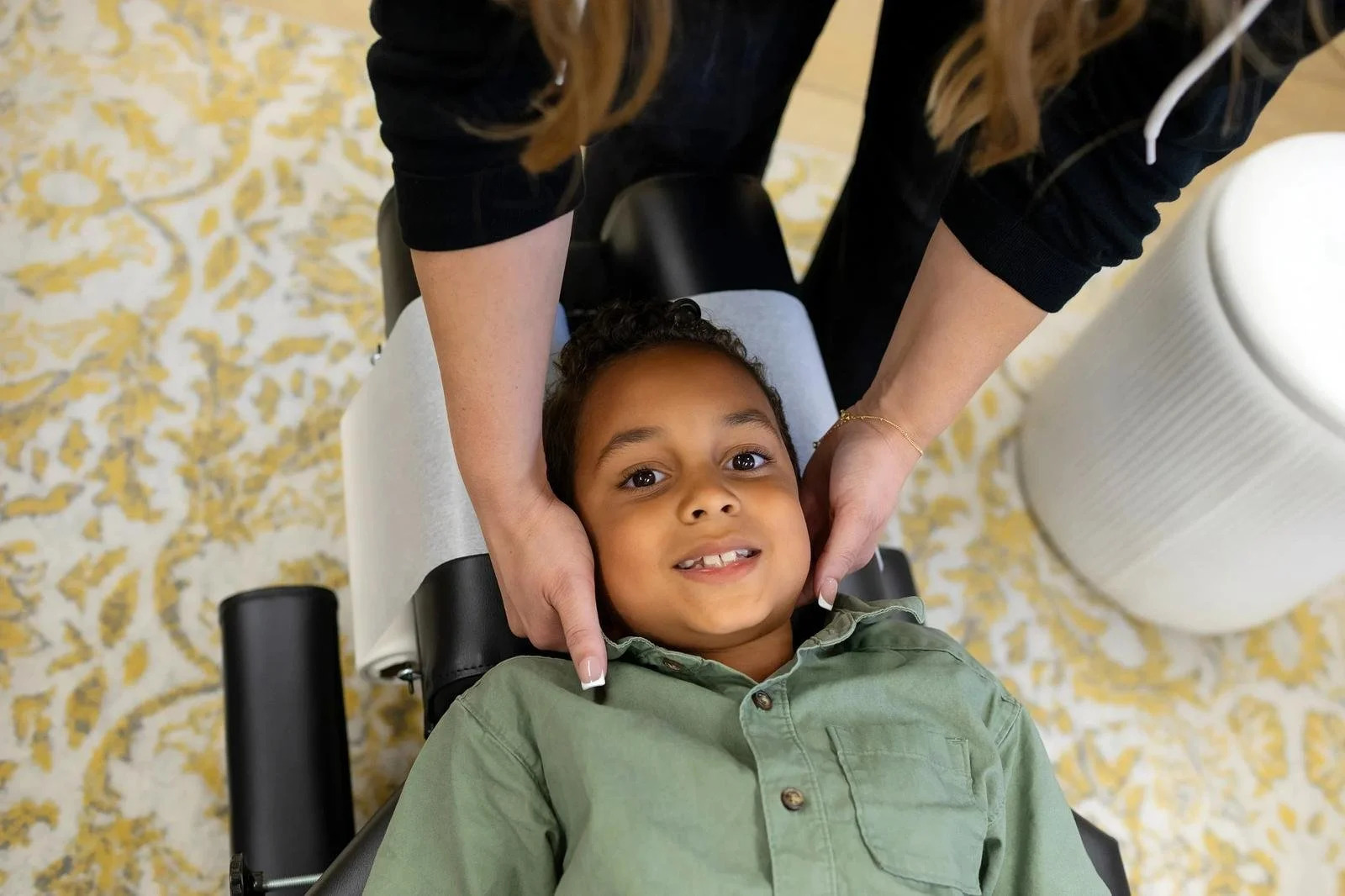
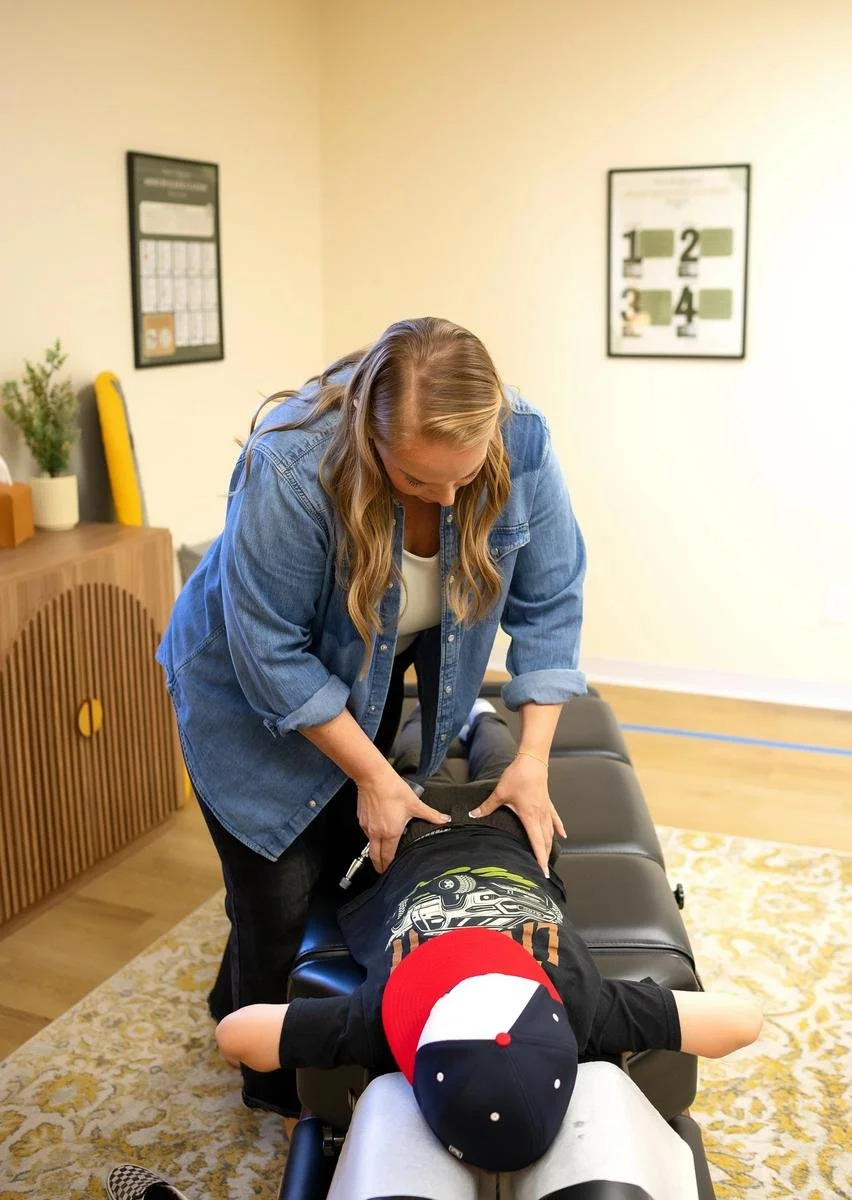
  • Gentle, specific chiropractic adjustments to reduce nervous system interference

  • Support for primitive reflex integration when needed

  • Guidance on developmental activities that reinforce their progress

  • Coordination with your child's other providers (therapists, doctors, teachers)

Our goal isn't to replace what's already working. It's to provide the neurological foundation that helps everything else work better.

This Isn't About
"Fixing" Your Child

Let's be really clear about something: your child is not broken.

Their brain is wired beautifully. Their intelligence is real. Their heart is good. They're not lazy, difficult, or "choosing" to struggle.

Sometimes, the nervous system just needs support in clearing the pathways and solidifying the developmental foundations that make focus, attention, and self-regulation possible.

We don't treat ADHD. We don't claim to cure anything.

What we do is optimize the nervous system function that allows your child to access the capabilities that are already in their amazing brain.

When the nervous system can regulate effectively, when developmental foundations are stable, when brain-body communication is clear—that's when you see the child who was there all along, finally able to show what they're capable of.

Next Step: Find Out
What's Really Happening

You've watched your child struggle long enough.

The homework battles. The "not reaching potential" reports. The feeling that your brilliant kid is trapped behind a wall they can't break through.

You've tried so many things. You're doing everything the doctors and teachers recommend. But you know in your gut that something's still missing.

Our comprehensive neurological examination will answer the questions that actually matter:

  • Is nervous system interference making focus harder than it needs to be?

  • What developmental stage is your child functionally operating from?

  • Do they have the neurological foundations needed for sustained attention?

  • Can we help create the stability that makes everything else you're doing more effective?

Maybe we can help. Maybe we can't. But you deserve answers that go deeper than "try harder" or "increase the medication."

Schedule your initial phone consultation. We'll talk privately about your child's history and challenges, and you can decide if you want to move forward with the examination.

Your child's struggles aren't their fault. And they're not yours either.

Sometimes the nervous system just needs support in laying the foundations that make focus possible.

Let's find out if we can help your child access the focus and potential you both know is there.

Schedule Free 15 minute consultation

Webster Certified & FOCUS Certified in the Brain Blossom Program
8 years specializing in neurologically-focused family care
Developmental lens addressing root causes, not just symptoms
Serving Temecula families seeking answers beyond behavioral management

Get to know Dr. Jennifer

Learn more

Frequently Asked Questions

  • Absolutely. Pediatric chiropractic adjustments are gentle, specific, and completely different from adult techniques. Dr. Jen uses pressure appropriate for a child's developing spine.

  • We don't recommend stopping any medications without consulting your prescribing physician. Many families find that optimizing nervous system function allows medications to work more effectively. Our goal is to support your child's nervous system so their brain can function at its best, whatever treatment approach you choose.

  • We specialize in neurologically-focused, developmental chiropractic care. We assess which developmental tools have inefficiencies and support your child's brain in making those tools work more efficiently. This requires specialized training in neurodevelopment (FOCUS certification, Brain Blossom Program) that most chiropractors don't have.

  • Every child is different, but many parents notice initial changes within 4-8 weeks—often improvements in sleep and emotional regulation first, followed by better focus and attention as tools become more efficient. Significant changes typically occur over 3-6 months of consistent care.

  • We are an out-of-network provider, which allows us to focus on what your child actually needs rather than insurance limitations. We provide superbills for potential reimbursement, and many families use HSA/FSA funds.

  • We specialize in neurodivergent children! Our office is sensory-friendly, and Dr. Jen is experienced in working with fidgety, active kids. Adjustments are quick (usually under 5 minutes), and we make the experience positive and comfortable.

Book Free 15 minute consultation

We Also Help Children With:

  • Sensory Processing Challenges

  • Anxiety in Children

  • Sleep Issues

  • Behavioral Challenges

  • Learning Challenges (Dyslexia)

  • Autism Spectrum Support

Learn more about our comprehensive Pediatric Chiropractic Services.

Cover image of a free downloadable guide titled 'This Month’s Brain Blossom Play and Connect Guide for Supporting Your Child’s Development'. The background features three children laughing and playing together, with a tablet displaying the guide's pages.

Download our Free Play & Connect Guide

Visit our Location
28936 Old Town Front St. Suite 106
Temecula, CA 92590

Pink house with a heart in the middle icon.

Give us a Call
(951)525-6566

A pink telephone receiver icon.

Send us a Message
hello@thetaprootchiro.com

Pink envelope icon.