Visit our Location
28936 Old Town Front St. Suite 106
Temecula, CA 92590

Pink house with a heart in the middle icon.

Give us a Call
(951)223-5587

A pink telephone receiver icon.

Send us a Message
hello@thetaprootchiro.com

Pink envelope icon.

Torticollis Treatment in Temecula

Is your baby's head always tilted to one side? That flat spot getting more noticeable despite constant repositioning?

Gentle Care for Your
Baby's Head Tilt

You're doing all the physical therapy exercises, repositioning throughout the day, and spending every tummy time session hoping to see improvement. But that head tilt is still there, and the helmet consultation date is getting closer.

At Taproot Chiropractic in Temecula, we understand the worry that comes with watching your baby struggle with torticollis. You're not alone, and there's hope for natural correction within the critical intervention window.

What Is Infant Torticollis?

Torticollis, also called "wry neck," occurs when the muscles on one side of your baby's neck become tight or shortened, causing their head to tilt toward one shoulder and rotate toward the opposite side. This positioning issue often leads to:

  • Persistent head tilt to one side

  • Difficulty turning head in both directions

  • Flat spot developing on back or side of head (plagiocephaly)

  • Preference for looking in only one direction

  • Asymmetrical facial features over time

  • Challenges with tummy time and motor development

According to pediatric research, approximately 1 in 250 infants are affected by congenital muscular torticollis, making it one of the most common musculoskeletal conditions in newborns.

Why Does Torticollis Happen?

Torticollis typically develops from:

Positioning in Utero: Cramped positioning during pregnancy can create muscle tightness and restricted movement patterns before birth.

Birth Process: The physical demands of delivery—especially with assisted births, longer labors, or positioning challenges—can affect the delicate structures of your baby's neck and upper spine.

Postural Preferences: Babies who consistently favor one position after birth may develop muscle imbalances that perpetuate the head tilt.

What Parents Notice First

Most parents first notice torticollis when:

  • Baby consistently looks to only one side

  • The head appears tilted even when baby is upright

  • A flat spot develops and becomes more pronounced

  • Baby resists turning their head during diaper changes or feeding

  • Tummy time is challenging because baby can't lift or turn their head comfortably

  • Photos show the head tilt becoming more obvious over time

If you're constantly repositioning your baby's head throughout the day and night, you're already recognizing that something needs support beyond positioning alone.

The Chiropractic + Physical
Therapy Approach

You may already be working with a pediatric physical therapist—that's excellent. Physical therapy focuses on stretching tight muscles and strengthening weak ones through exercises and repositioning techniques.

But here's what many families don't realize: when the upper cervical spine is misaligned, the nerves controlling those neck muscles can't function optimally—no matter how much stretching is performed.

Think of it this way: if the nerve signal to the muscle isn't clear due to spinal misalignment, the muscle will continue to receive distorted messages, making lasting change difficult to achieve through muscle work alone.

A 2013 study in the Journal of Pediatric Rehabilitation Medicine found that infants receiving both chiropractic care and physical therapy showed faster and more complete resolution of torticollis compared to physical therapy alone.

How Neurologically-Focused Chiropractic Care Supports Torticollis Recovery

Our approach at Taproot Chiropractic addresses the nervous system foundation that controls muscle function:

Spinal Alignment: Gentle, specific adjustments to the upper cervical spine help restore proper alignment where nerves exit to control neck muscles.

Nerve Function Optimization: When vertebrae are properly aligned, nerve signals can flow clearly from brain to muscle, allowing the muscles to respond appropriately to your PT exercises.

Natural Movement Patterns: Supporting the nervous system helps your baby's body remember balanced, symmetrical movement patterns.

Enhanced PT Effectiveness: When nerve function improves, the stretching and strengthening exercises from physical therapy become more effective because muscles can receive and respond to signals properly.

What to Expect: Your Baby's Care Journey

Initial Consultation

We begin with a comprehensive health history discussion and gentle examination to understand your baby's specific presentation and needs.

Neurological Assessment

Using our INSiGHT scanning technology, we assess how your baby's nervous system is functioning and identify areas where nerve communication may be compromised.

Gentle, Specific Adjustments

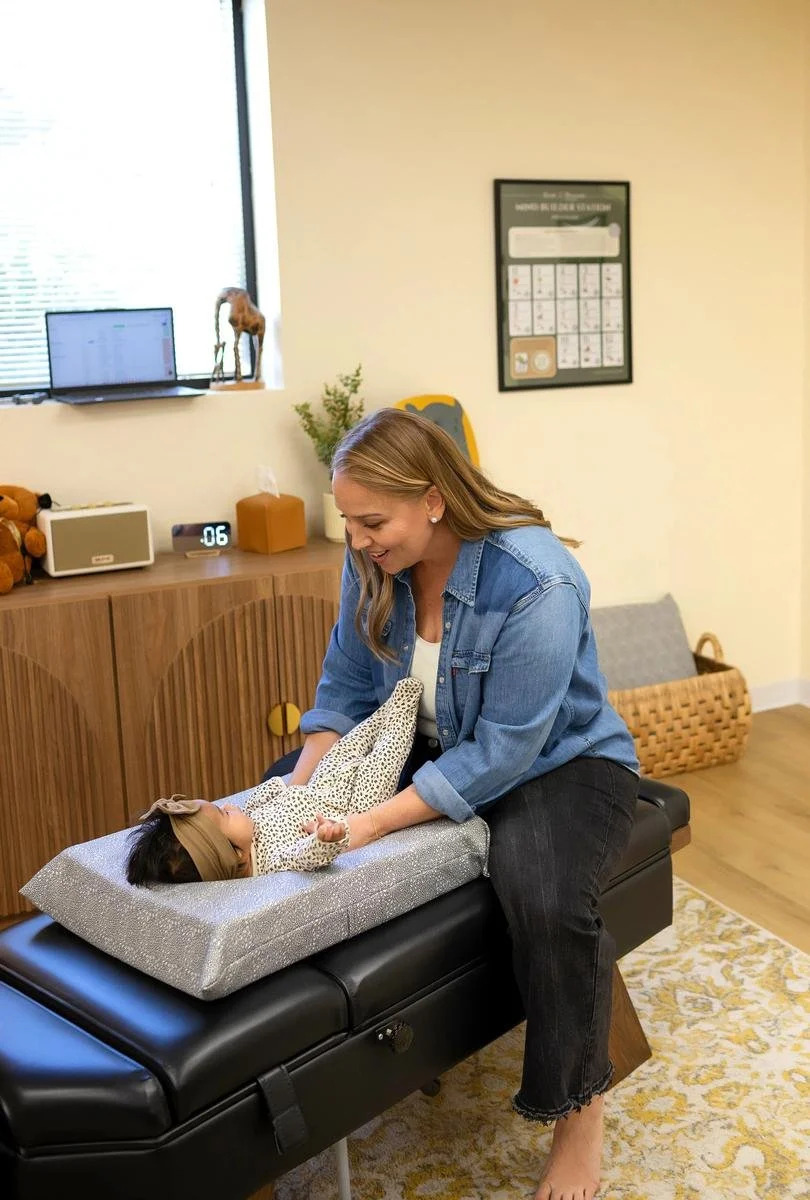
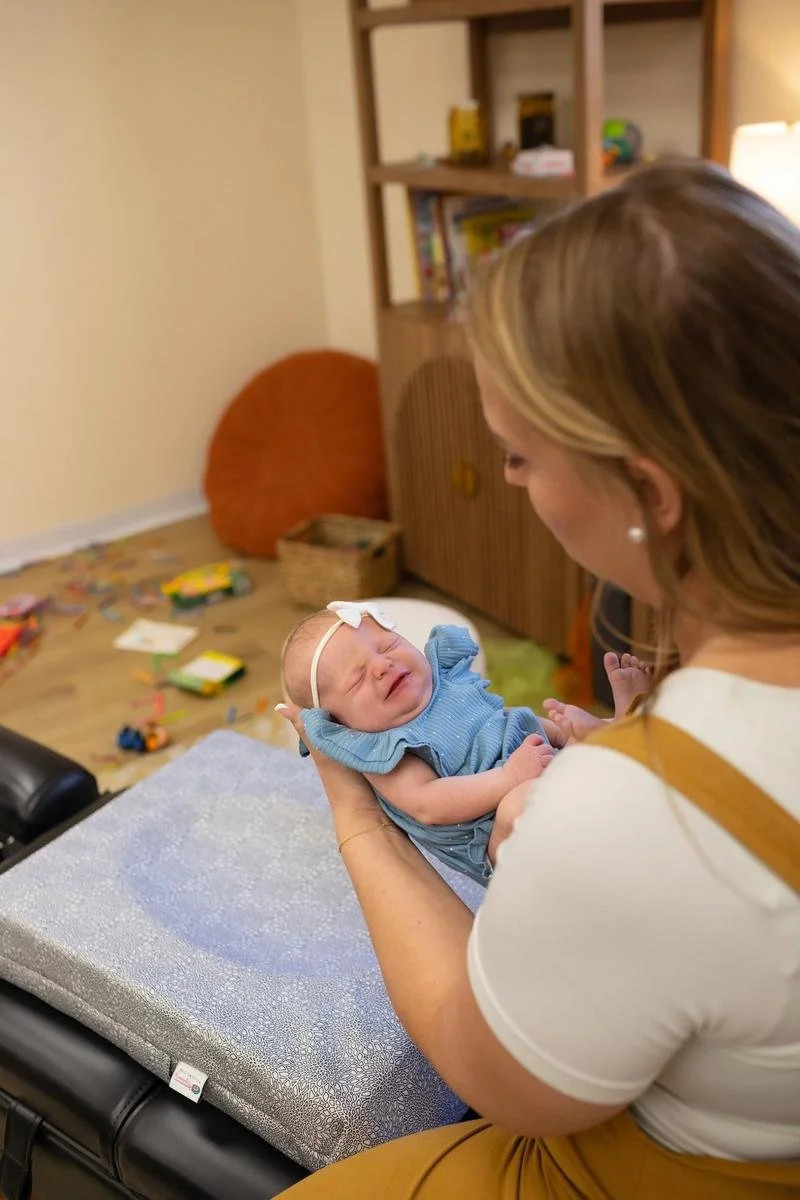
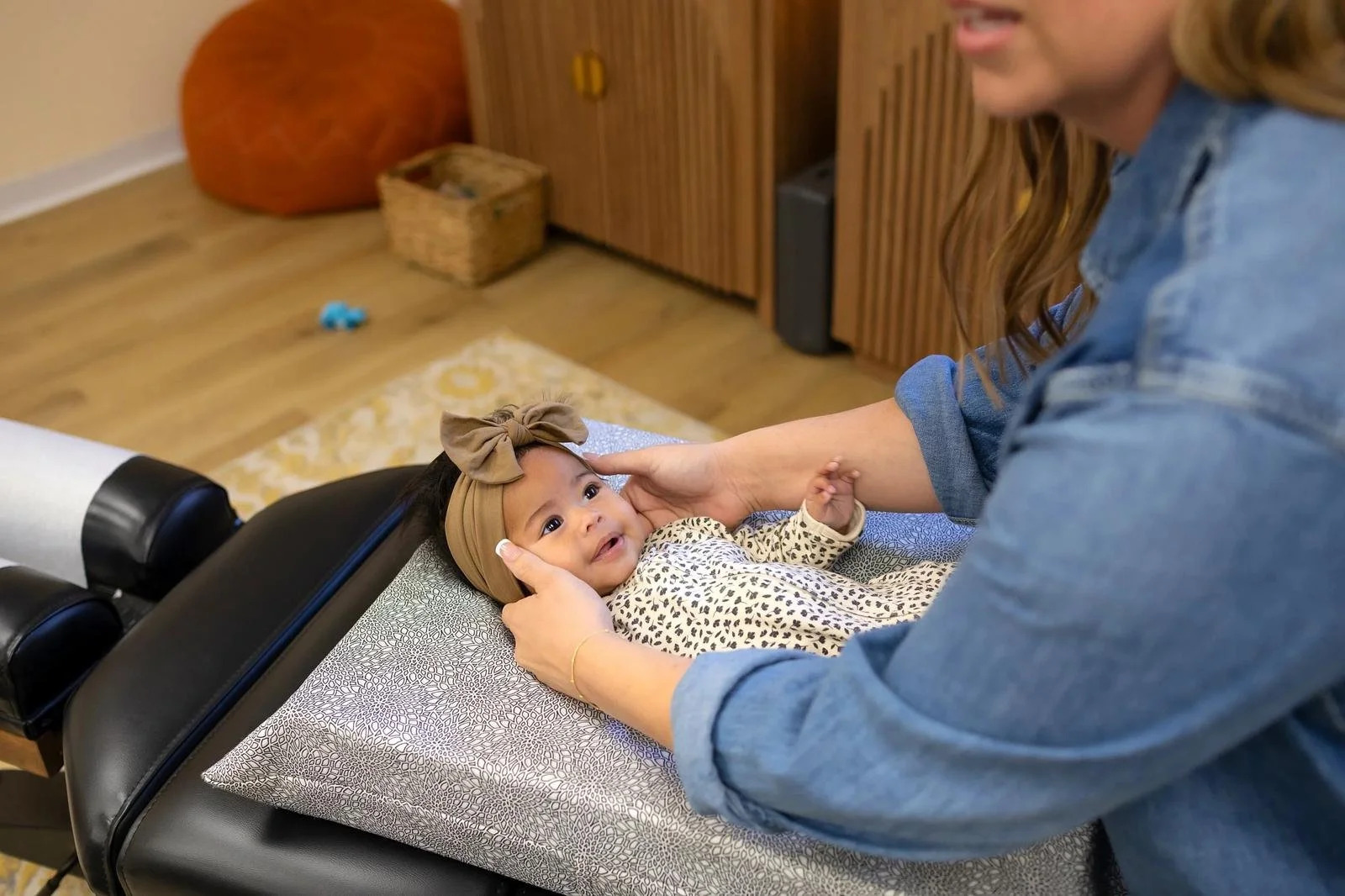
Pediatric chiropractic adjustments use no more pressure than you'd use to test the ripeness of a tomato. These are not the adjustments you might imagine for adults. They're incredibly gentle, specific, and tailored to your infant's delicate system.

Collaborative Care

We work alongside your physical therapist, pediatrician, and other providers to ensure your baby receives comprehensive, coordinated care.

Progress Monitoring

We track improvements in head positioning, range of motion, and developmental milestones, adjusting our care plan as your baby responds.

The Critical Intervention Window

The most effective time to address torticollis is during the first year of life, when your baby's skull bones are still developing and the nervous system is highly adaptable. While improvement is possible at any age, early intervention—ideally before 6 months—offers the best opportunity for complete resolution without helmet therapy.

If you're approaching a helmet evaluation, there's still time to maximize natural correction through comprehensive nervous system support.

Take the Next Step

That head tilt isn't going away on its own, and the window for optimal natural correction is time-sensitive. But you don't have to choose between "waiting and seeing" or accepting helmet therapy as inevitable.

There's a comprehensive approach that addresses why the muscles aren't releasing despite your repositioning efforts—and it starts with supporting your baby's nervous system.

Schedule Your Initial Consultation

During this appointment, we'll:

  • Review your baby's complete health history

  • Perform a gentle, thorough examination

  • Use INSiGHT scanning to assess nervous system function

  • Explain exactly how we can support your baby's torticollis recovery

  • Answer all your questions about what to expect

  • Develop a personalized care plan

The natural correction window is still open. Let's make the most of it together.

Webster Certified & FOCUS Certified in the Brain Blossom Program
8 years specializing in neurologically-focused family care
Developmental lens addressing root causes, not just symptoms
Serving Temecula families seeking answers beyond behavioral management

Get to know Dr. Jennifer

Frequently Asked Questions

  • Pediatric chiropractic care is extremely gentle and safe when performed by a trained, certified practitioner. Dr. Jennifer Gordon holds specialized certifications in pediatric and prenatal care, including FOCUS certification in neurodevelopment. The techniques used are specifically designed for infants and involve gentle, sustained contact—not forceful manipulation.

  • No—chiropractic care and physical therapy work beautifully together. PT addresses the muscles directly through stretching and strengthening. Chiropractic care addresses the nervous system that controls those muscles. Together, they create faster, more complete resolution than either approach alone.

  • Every baby responds differently based on severity, age, and how long the torticollis has been present. Many families notice improved head positioning and easier movement within the first few weeks of care. Complete resolution typically requires consistent care over several weeks to months.

  • If physical therapy progress has plateaued or is slower than expected, addressing the nervous system component often helps restart improvement. Many families find that adding chiropractic care helps them finally achieve the results they've been working toward.

  • While we can't guarantee outcomes, many families have successfully avoided helmet therapy by addressing torticollis comprehensively through both chiropractic care and physical therapy within the critical early months. The earlier intervention begins, the better the chance of full natural correction.

We Also Help Children With:

Torticollis often occurs alongside other conditions that benefit from nervous system support:

  • Plagiocephaly (Flat Head Syndrome)

  • Breastfeeding Difficulties

  • Tongue Tie and Lip Tie

  • Infant Sleep Issues

  • Fussy Baby/Colic

  • Delayed Motor Milestones

Many of these challenges share the same root cause: nervous system function that needs support to coordinate your baby's development optimally.

Learn more about our comprehensive Infant/Baby Chiropractic Services.

Cover image of a free downloadable guide titled 'This Month’s Brain Blossom Play and Connect Guide for Supporting Your Child’s Development'. The background features three children laughing and playing together, with a tablet displaying the guide's pages.

Download our Free Play & Connect Guide

Visit our Location
28936 Old Town Front St. Suite 106
Temecula, CA 92590

Pink house with a heart in the middle icon.

Give us a Call
(951)223-5587

A pink telephone receiver icon.

Send us a Message
hello@thetaprootchiro.com

Pink envelope icon.