
Breech Positioning Support in Temecula
Gentle, Webster-certified care focused on your comfort, without attempting to turn your baby.

If you've just been told your baby is breech, you're not alone, and you have options. At Taproot Chiropractic in Temecula, Dr. Jennifer Gordon offers gentle, Webster-certified care focused on pelvic comfort and balance during this stage of pregnancy. Chiropractic care does not turn babies or treat breech presentation. Your OB or midwife remains your guide for fetal position and delivery options, and our care works alongside theirs as part of our prenatal chiropractic care in Temecula.

What Does It Mean When a Baby Is Breech?
A breech baby is positioned bottom-down or feet-down instead of head-down (vertex) for delivery. Breech affects roughly 3 to 4% of full-term pregnancies, and it's more common earlier in pregnancy, before baby settles into a final position.
There are three main types: frank breech, complete breech, and footling breech. Whatever the type, a breech diagnosis can change your birth plan. Your provider may discuss an external cephalic version (ECV) or a scheduled cesarean.
For many moms, hearing "your baby is breech" brings immediate anxiety. Knowing what your care team can do, and what supportive care can and can't do, helps you make calm, informed decisions.
What Affects a Baby's Position?
Many factors can influence how a baby is positioned, and often there's no single clear cause. Your OB or midwife may consider things like placenta location, amniotic fluid levels, the shape of the uterus, carrying multiples, or how far along you are.
What we focus on is your body's comfort. Pregnancy changes how your pelvis, round ligaments, and surrounding muscles feel and move. Our care supports comfort and movement through those changes, while your birth team monitors baby's position.
How Webster-Certified Care Supports You in Temecula
Webster-certified care uses gentle adjustments as sensory input through the spine and pelvis. The goal is to support comfort, movement, brain-body communication, and nervous-system adaptability as your body changes in late pregnancy.
Dr. Jennifer is certified in the Webster Technique and is a Spinning Babies Aware Practitioner. Care is designed for pregnant bodies, adapted to each trimester, and never uses pressure on your belly.
When Should I Start Care If My Baby Is Breech?
Many moms begin Webster care in the third trimester, often around weeks 30 to 34. You don't need to wait for a breech diagnosis to start. Many of our Temecula moms begin earlier in pregnancy for general comfort.
How often you'll come in
During the late third trimester, Dr. Jennifer often recommends two visits per week to support consistent pelvic comfort and balance. Your exact plan depends on your exam and how you're feeling.
What a visit feels like
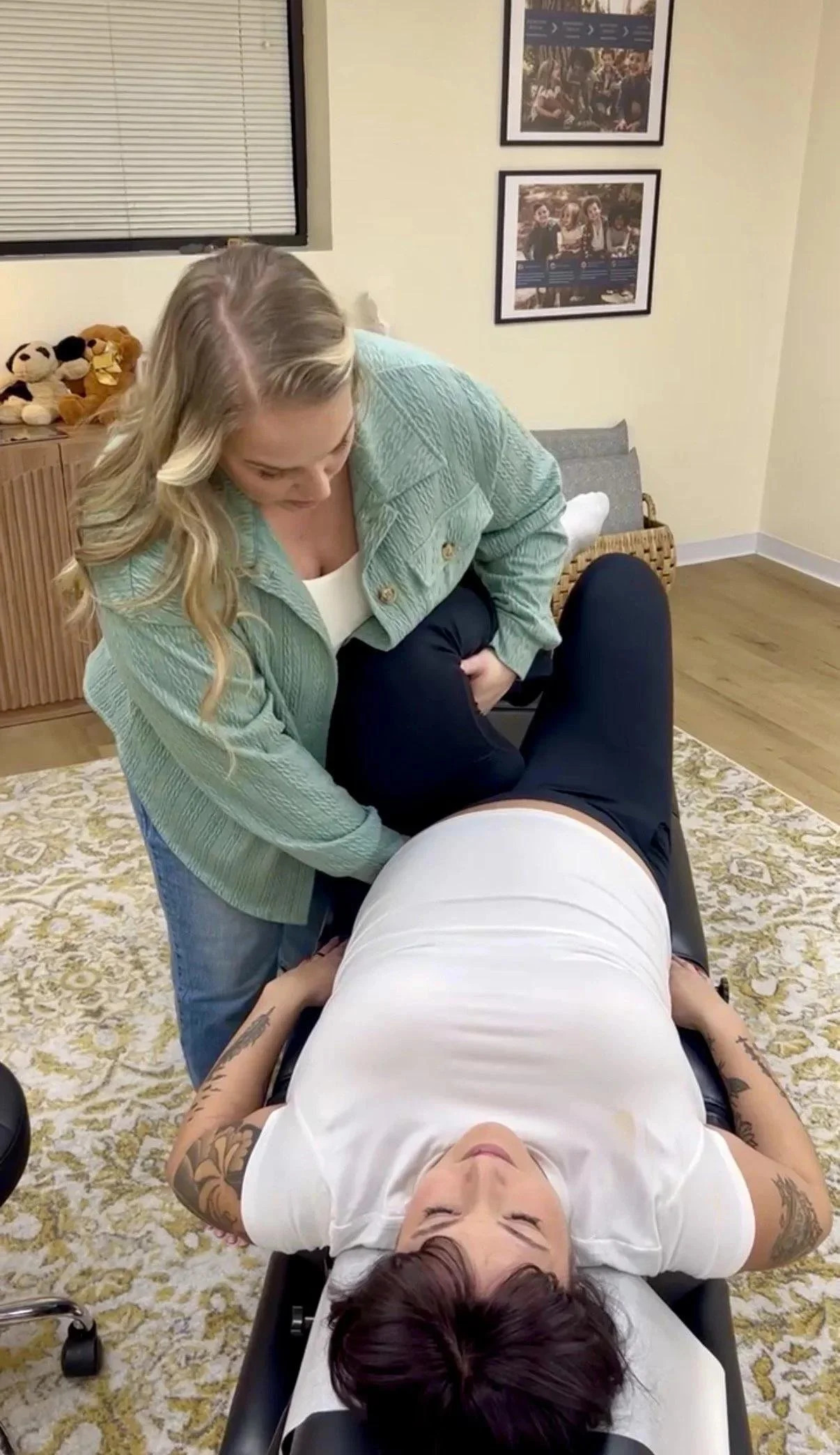
The adjustment is gentle and comfortable. You'll lie on a pregnancy-adapted table while Dr. Jennifer performs a sacral analysis, a gentle adjustment, and soft-tissue work on the round ligaments.
Working Alongside Your Birth Team
We see chiropractic as one supportive piece of your care, not a replacement for it. Let your OB or midwife know you're receiving chiropractic care, and tell us about any precautions they've given you. If your provider recommends an ECV or discusses delivery options, those decisions stay with you and your birth team.
Breech Positioning Questions
Take the Next Step
Whether you're looking for answers, seeking relief, or wanting to support your family's nervous system — we're here to help you thrive.