
Plagiocephaly Support in Temecula
Gentle support for babies with a flat spot or turning preference, alongside pediatric and physical-therapy care.

What Is Plagiocephaly?
Plagiocephaly — commonly called flat head syndrome — is a condition where one area of a baby's skull becomes flattened, creating an asymmetrical head shape. It's one of the most common concerns pediatricians see in the first year of life.
Positional plagiocephaly develops from sustained pressure on one area of the skull, typically from consistently lying or turning in the same direction. Because a baby's skull bones are soft and malleable, repeated pressure in one spot can reshape the cranium over time.
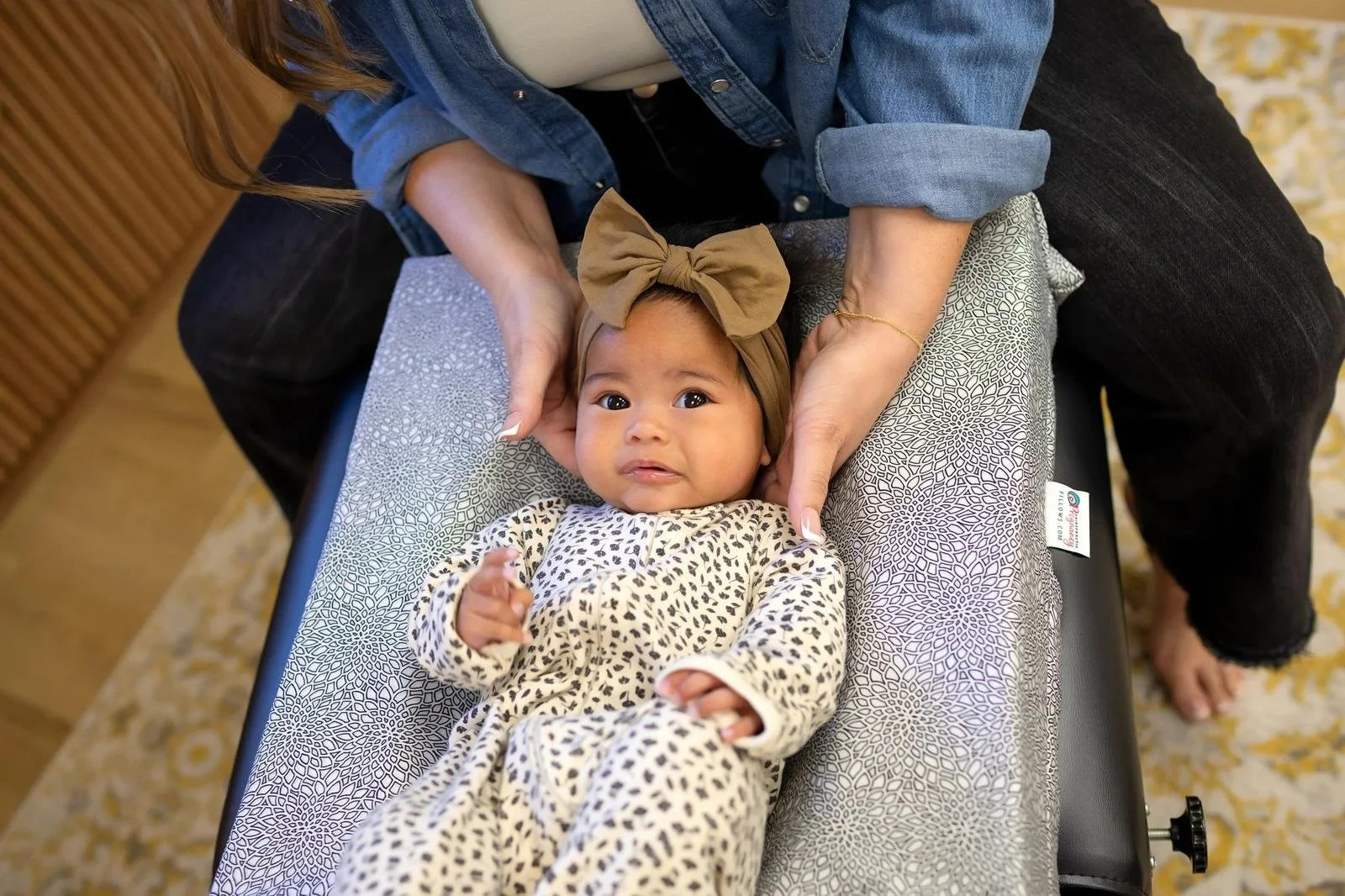
Causes of Flat Head in Babies
Positional plagiocephaly can be associated with several factors, including a consistent head-turning preference, torticollis, birth positioning, and prolonged pressure in one position. A pediatric clinician should assess head shape and movement to determine the appropriate next steps.
Repositioning guidance, physical therapy, or helmet evaluation may be recommended depending on your baby's age and presentation.

The Torticollis-Plagiocephaly Connection
Torticollis and plagiocephaly frequently occur together because a consistent head-turning preference can place repeated pressure on one area of the skull. Your pediatric and physical-therapy team can evaluate movement and recommend condition-specific care.

The Supportive Role of Chiropractic
Gentle cervical and cranial input may support comfort, brain-body communication, and adaptable movement. Chiropractic does not diagnose or treat plagiocephaly, reshape the skull, or replace pediatric assessment, repositioning guidance, physical therapy, or helmet evaluation.
If you notice head-shape asymmetry or a consistent turning preference, seek pediatric evaluation early so you can understand the full range of appropriate options.
When to Seek Care
If you notice asymmetry in your baby's head shape, a persistent preference to turn one direction, or a developing flat spot, seek pediatric assessment sooner rather than later.
Dr. Jennifer can also advise on positioning strategies, tummy time recommendations, and whether a referral for helmet evaluation is appropriate alongside chiropractic care.
Frequently Asked Questions
Can a chiropractor help with flat head syndrome?
Chiropractic does not diagnose or treat plagiocephaly or reshape the skull. Gentle care may support comfort and adaptable movement as part of a plan led by your baby's pediatric and physical-therapy providers.
Is plagiocephaly related to torticollis?
They can occur together because a turning preference may increase pressure on one area of the skull. A pediatric clinician or physical therapist can evaluate the relationship for your baby.
How early should I address my baby's flat head?
Ask your pediatric clinician as soon as you notice a persistent flat spot or turning preference. They can advise on timing for repositioning, physical therapy, or helmet evaluation.
Does my baby need a helmet?
That decision belongs with your baby's pediatric clinician and qualified helmet or craniofacial specialists. Chiropractic is not a substitute for helmet evaluation.