
Tongue Tie Support in Temecula
Gentle, collaborative care for babies with feeding challenges, before and after a release.
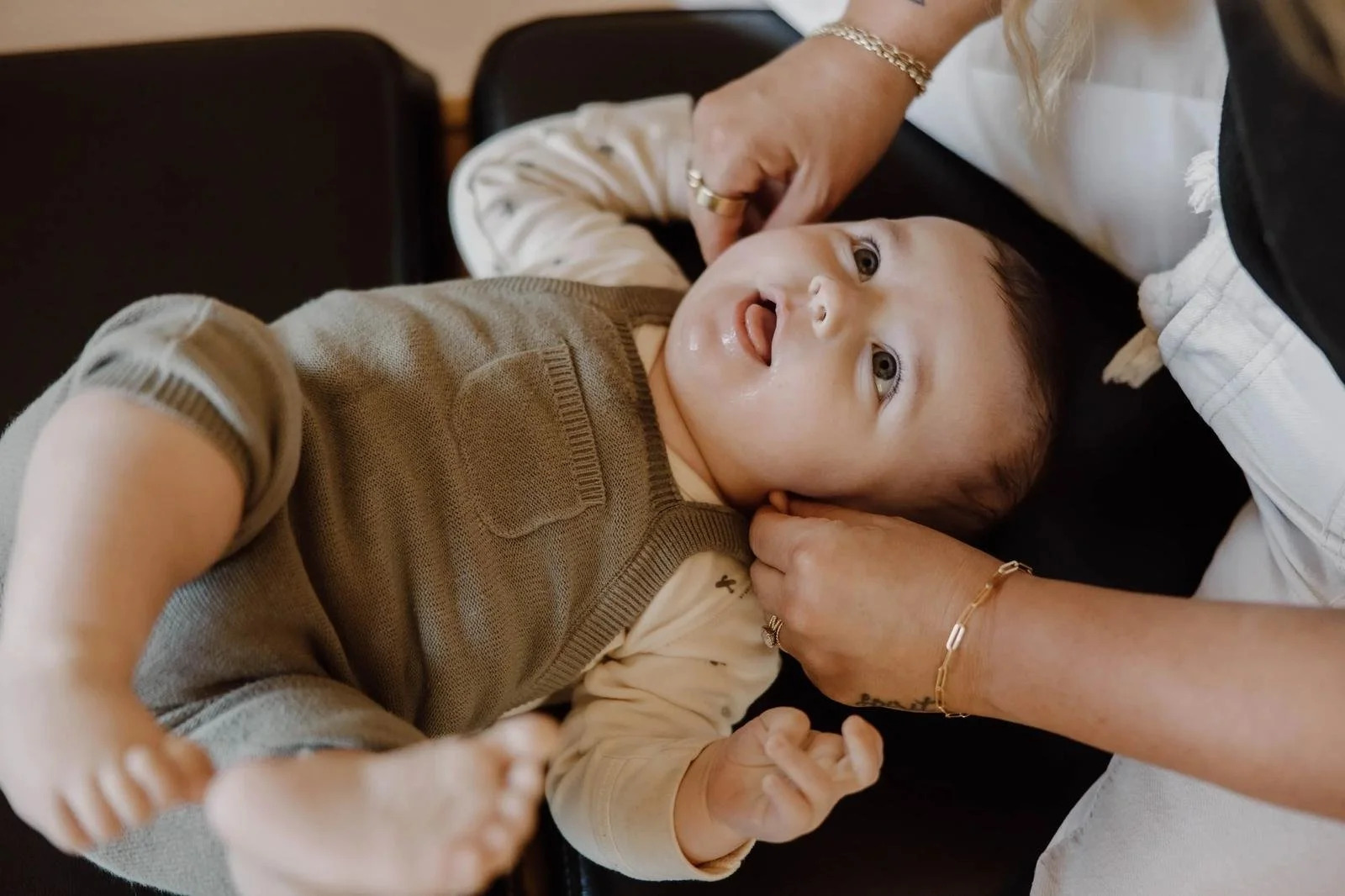
What Is Tongue Tie?
Tongue tie (ankyloglossia) occurs when the frenulum — the thin band of tissue connecting the tongue to the floor of the mouth — is too tight, too short, or too thick, restricting the tongue's range of motion. Lip tie is a similar restriction affecting the upper lip.
Tongue tie affects an estimated 4–11% of newborns and can significantly impact breastfeeding, bottle feeding, and oral development. When the tongue can't move freely, baby can't create the suction and coordination needed for effective feeding.

Signs Your Baby May Have a Tongue Tie
- Difficulty latching or maintaining a latch
- Clicking sounds during feeding
- Frequent breaking of suction at the breast or bottle
- Poor milk transfer despite long feeds
- Excessive gassiness from swallowing air
- Reflux symptoms linked to poor feeding mechanics
- Slow weight gain
- Maternal nipple pain or damage.
Not all tongue ties are immediately visible. Posterior tongue ties can be harder to identify but equally impactful on feeding and development.
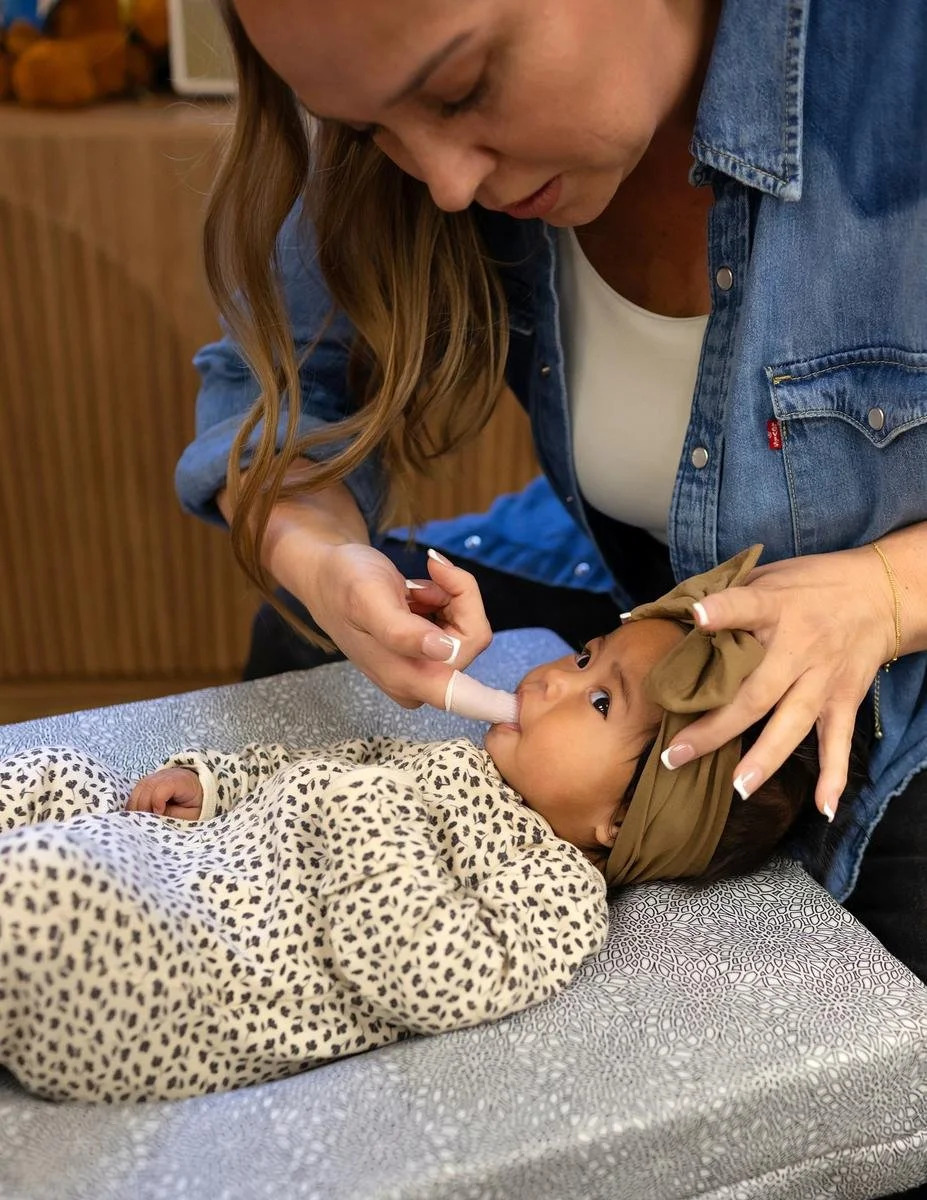
The Role of Chiropractic in Tongue Tie Support
Tongue tie doesn't exist in isolation. When a baby's tongue is restricted, their body compensates — creating tension patterns through the jaw, cranium, cervical spine, and upper body. These compensations can make feeding difficult even after a release procedure if they're not addressed.
Chiropractic does not diagnose or treat tongue-tie. When included in a collaborative care plan, it may provide supportive sensory input in two stages:
- Before a release — Gentle cranial and cervical input may support comfort, movement, and nervous-system adaptability while your clinical team evaluates feeding and oral function.
- After a release — Supportive care may help the nervous system adapt to changing sensory input. It does not treat the release site, direct wound healing, or replace lactation, dental, ENT, or pediatric follow-up.
Our Collaborative Approach
Dr. Jennifer works alongside lactation consultants, pediatric dentists, ENTs, and other providers involved in your baby's tongue tie care. Chiropractic is one piece of a team-based approach that gives your baby the best chance at successful feeding and development.
Stories from Our Families
"I started bringing my toddler with me and he absolutely LOVES her. Now I also bring my newborn, and she's helped so much with her body tension, latch, and feeding... We trust her with our whole family and I seriously can't recommend her enough!"
* Individual experiences vary. Testimonials do not guarantee specific results.
Frequently Asked Questions
How does chiropractic help with tongue tie?
Chiropractic does not treat tongue-tie. Gentle care may support comfort, movement, brain-body communication, and adaptability as one part of a coordinated feeding-care team.
Should my baby see a chiropractor before a tongue tie release?
That decision should be made with your baby's pediatric, dental, ENT, and lactation providers. Chiropractic may offer supportive sensory input, but it does not prepare tissue to heal or replace clinical release planning.
What are signs of tongue tie in a newborn?
Poor latch, clicking during feeds, frequent suction breaks, slow weight gain, excessive gas, maternal nipple pain, and reflux symptoms. Posterior ties may not be visually obvious but still affect function.
Can chiropractic help breastfeeding after a release?
Feeding outcomes vary. Chiropractic may support comfort and adaptability, but it does not guarantee feeding improvement or replace skilled lactation and medical follow-up.