
INFANT & NEWBORN CHIROPRACTOR

Why Newborns Benefit From Chiropractic Care?
Your baby's nervous system is the first thing that develops in the womb — and the birth process is the first major physical stress it endures. Even uncomplicated deliveries place significant force on a newborn's spine, skull, and upper cervical area. When that stress creates tension patterns that go unaddressed, it can affect everything from feeding and sleep to digestion and motor development.
Infant chiropractic care isn't about treating a diagnosis. It's about assessing your baby's nervous system early and supporting the foundation that every other aspect of development depends on.
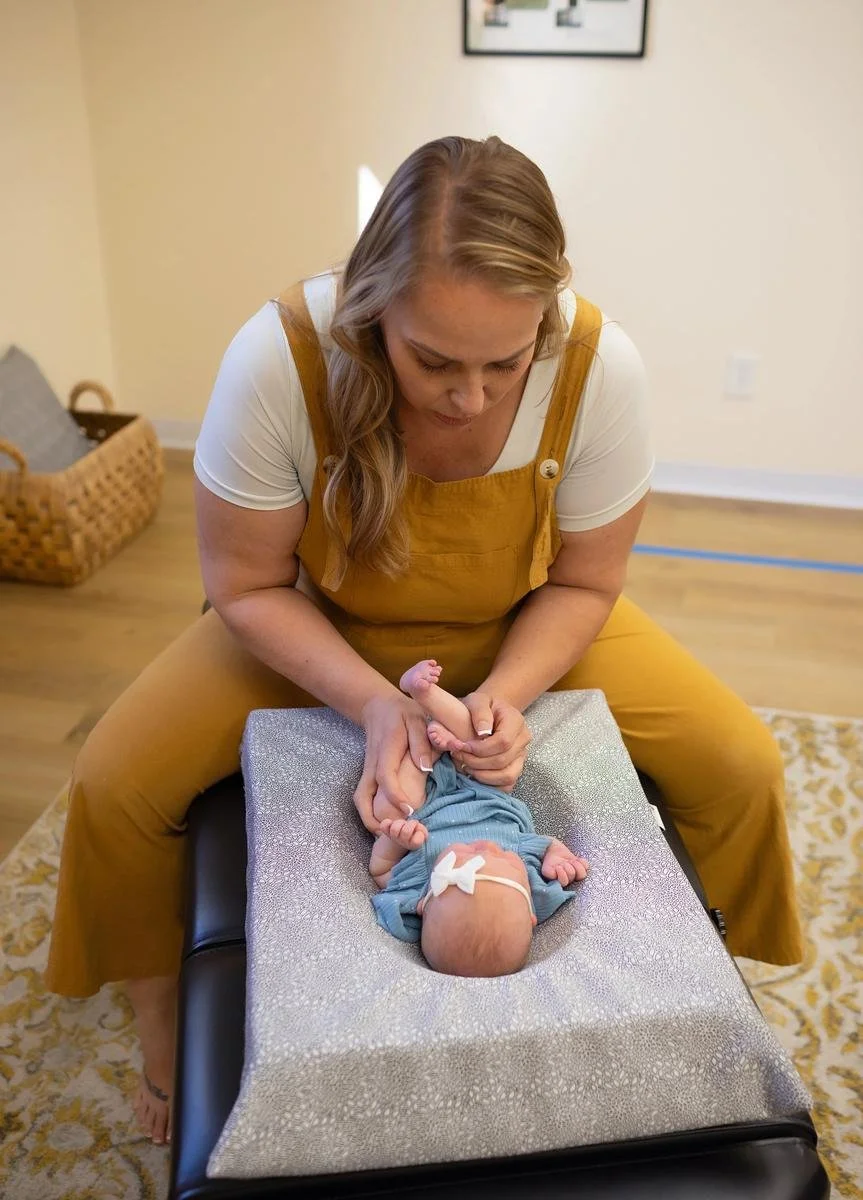
Birth Trauma & the Nervous System
The word "trauma" doesn't always mean something went wrong. It simply means your baby's body experienced significant physical force — and it did, regardless of how delivery went.
Vaginal delivery — Compression, rotation, and traction forces on the head and neck during the birth canal passage can create upper cervical misalignment and tension through the spine.
C-section — The sudden transition from uterine compression to rapid extraction places a different kind of stress on the spine and nervous system, often concentrated in the upper neck and cranium.
Assisted delivery — Vacuum extraction, forceps, or prolonged pushing increase the mechanical forces on baby's head, neck, and upper spine significantly.
These aren't rare events. They're the reality of birth. And the tension patterns they create are exactly what infant chiropractic care is designed to identify and address.
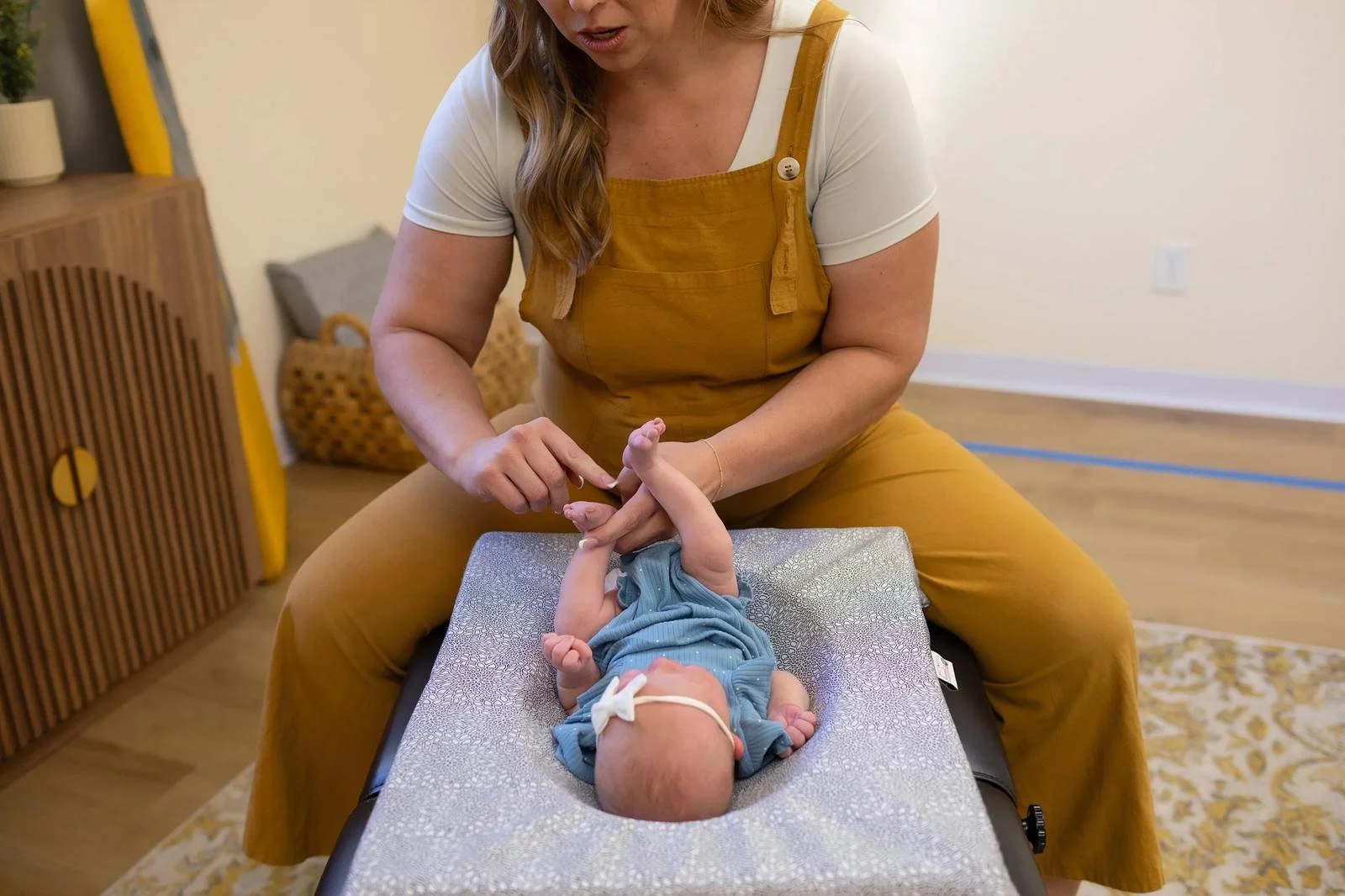
What We Look For in Your Baby?
During your baby's assessment, Dr. Jennifer uses INSiGHT neurological scanning along with a hands-on evaluation to identify subluxation patterns — areas where the spine and nervous system aren't communicating efficiently. Common signs that bring parents in include difficulty latching or feeding on one side, excessive fussiness or colic-like crying, reflux, spitting up, or digestive discomfort, head tilt or preference to turn one direction (torticollis), disrupted sleep patterns, arching of the back or body tension, and delayed motor milestones like rolling or crawling.
These aren't isolated symptoms. They're signals that your baby's nervous system is under stress.
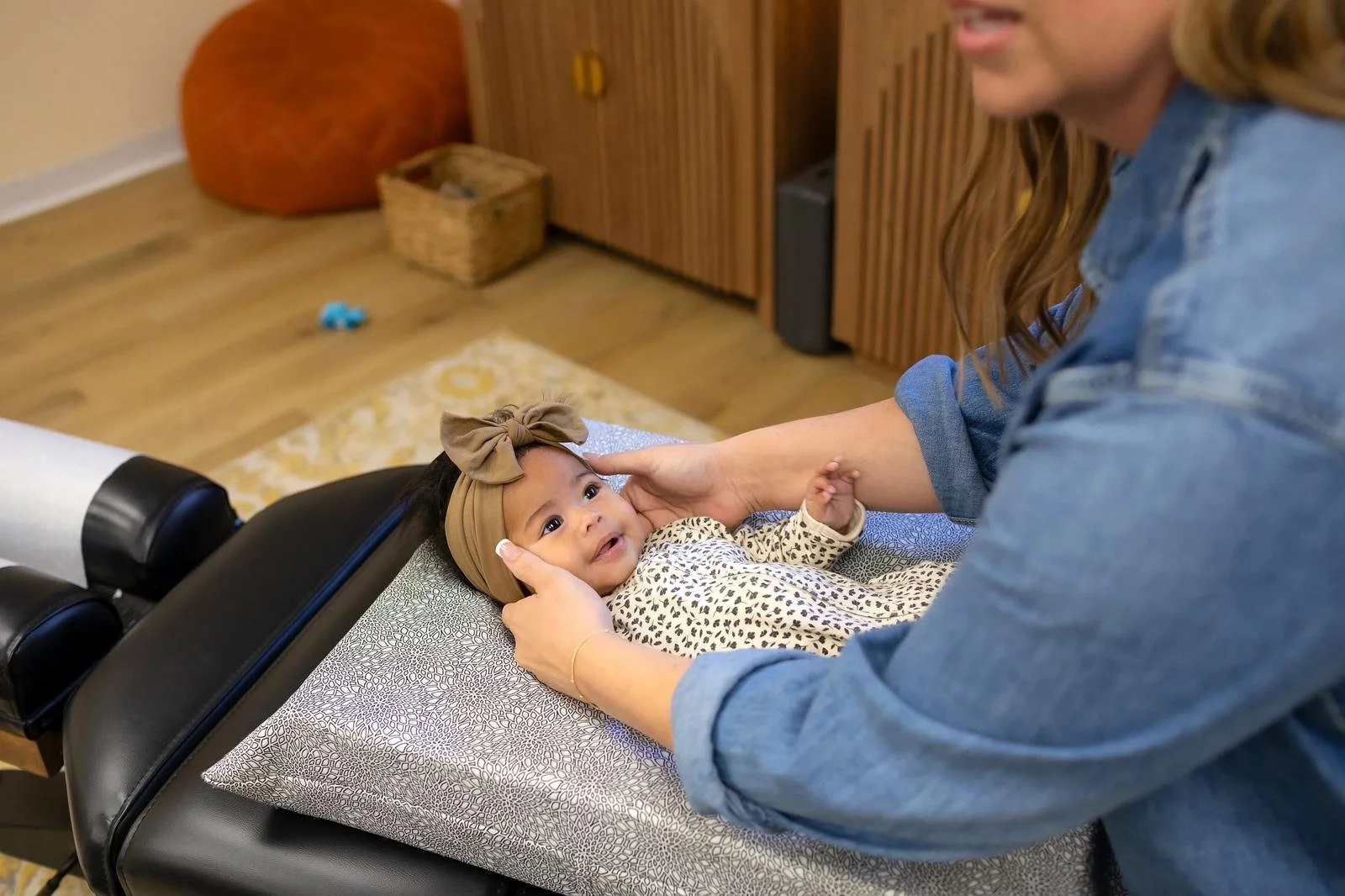
How Gentle Is a Baby's Adjustment?
This is the question every parent asks — and it's a good one.
Infant adjustments use no more pressure than you'd use to test the ripeness of a tomato. There's no twisting, no cracking, no forceful manipulation. Dr. Jennifer uses sustained fingertip contact at specific points along the spine and cranium to release tension and restore neurological communication.
Most babies relax during their adjustment. Many fall asleep. Parents are often surprised by how gentle and brief the process is.
Conditions We Help With
Gentle nervous system care to calm the dysregulation behind excessive crying.
Pre- and post-release care to address cranial and cervical tension affecting feeding.
Cervical and cranial support for head tilt, limited neck rotation, and associated tension.
Upper cervical alignment to support drainage and immune function.
Nervous system support for healthy gut motility and digestive function.
Addressing the vagus nerve and upper cervical patterns that drive digestive dysfunction.
Addressing the underlying tension patterns contributing to cranial asymmetry.

When to Bring Your Baby In
The short answer: as early as possible. Many families bring their newborn in within the first days or weeks of life — especially after a difficult delivery, C-section, or assisted birth. But there's no "too late." Whether your baby is 3 days old or 9 months old, their nervous system will benefit from assessment and care.
If you're unsure whether your baby needs chiropractic, we offer complimentary 15-minute consultations so you can ask questions and learn whether our approach is right for your little one.
Frequently Asked Questions
-
Yes. Infant adjustments are extremely gentle — using sustained fingertip pressure, not the manual adjustments you might associate with adult chiropractic. Dr. Jennifer is FOCUS-certified with specialized training in infant neurological assessment and care.
-
Within the first days of life. Early assessment allows us to identify and address tension patterns from birth before they create downstream effects on feeding, sleep, and development.
-
About the same pressure you'd use to check a tomato for ripeness. There's no cracking, twisting, or forceful movement. Most babies relax or fall asleep during their adjustment.
-
Difficulty feeding or latching, excessive crying or colic, reflux, head tilt or preference to one side, disrupted sleep, arching, body tension, or any concerns about motor development. If something feels off, trust your instincts — that's reason enough to have your baby assessed.