
INFANT TORTICOLLIS

What Is Torticollis?
Torticollis is a condition where a baby's head tilts to one side and rotates toward the other, caused by tightness or shortening of the sternocleidomastoid (SCM) muscle in the neck. It can be present at birth (congenital) or develop in the early weeks of life (acquired).
You might notice your baby consistently looking one direction, resisting turning their head the other way, preferring one breast during feeding, or developing a flat spot on one side of their head.
Torticollis is one of the most common musculoskeletal conditions in infants — and one of the most responsive to early intervention.

Causes and Signs Parents Notice
Torticollis often develops from intrauterine positioning (crowding, breech, or prolonged time in one position), birth trauma (especially assisted deliveries with vacuum or forceps), and upper cervical misalignment creating muscle guarding and tension.
Common signs include a persistent head tilt to one side, limited range of motion when turning the neck, preference for feeding on one side, fussiness when placed in certain positions, and a developing flat spot (plagiocephaly) on the side they favor.
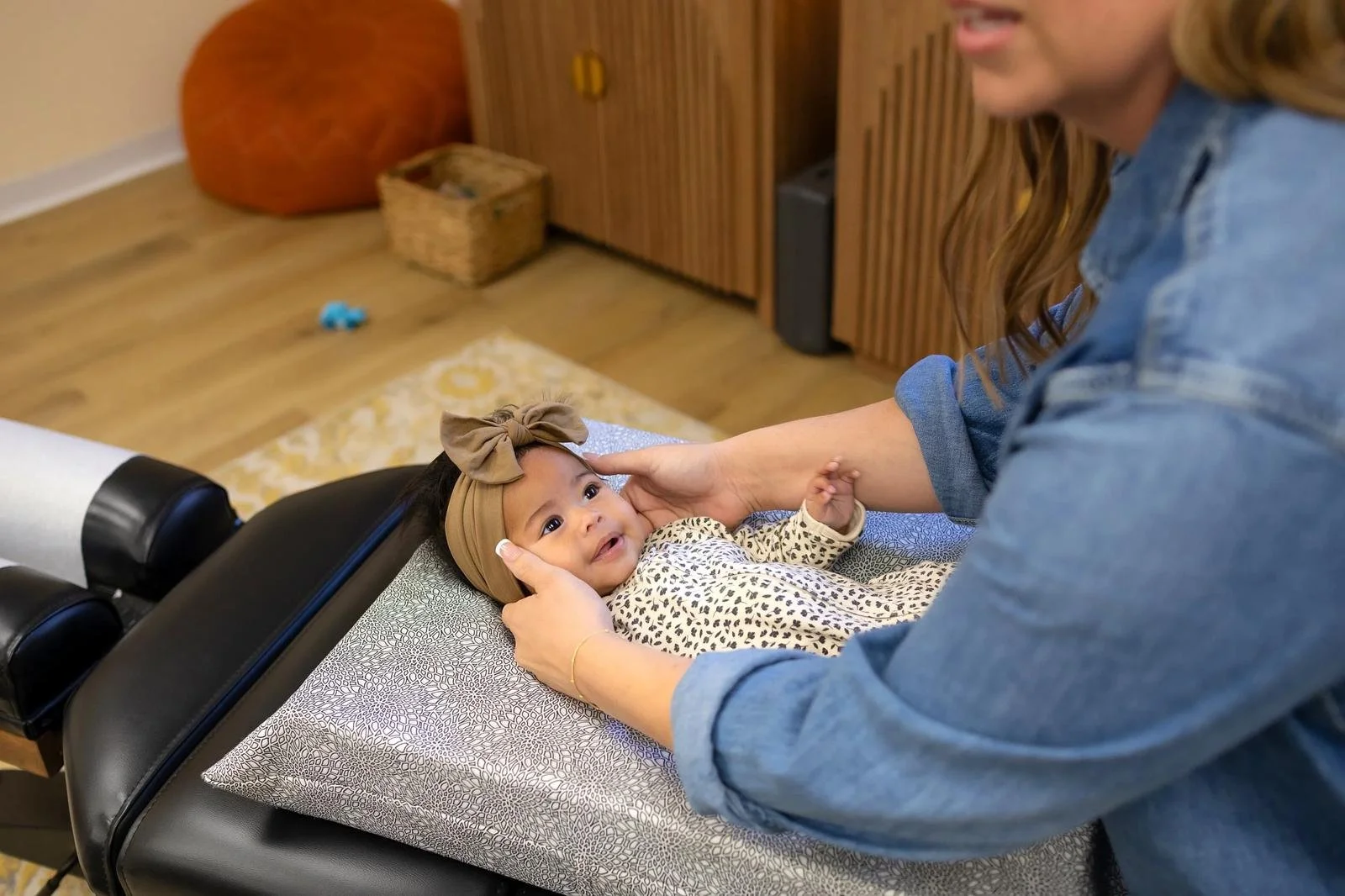
How Chiropractic Helps Infant Torticollis
Torticollis involves more than just a tight muscle. The cervical spine, cranium, and nervous system are all part of the pattern. Chiropractic care addresses the neurological and structural components simultaneously.
Dr. Jennifer uses gentle cervical adjustments and cranial techniques to release the upper neck tension that's driving the muscle tightness. As alignment improves, the SCM relaxes, range of motion increases, and your baby begins moving their head freely in both directions.
This approach works with the body's own healing capacity rather than forcing motion through a restricted area. We also treat infant tongue tie.

Early Intervention Matters
The earlier torticollis is addressed, the better the outcome. Left unaddressed, torticollis can lead to plagiocephaly (flat head syndrome) from sustained pressure on one side, asymmetric facial development, delayed motor milestones (rolling, crawling, sitting), and feeding difficulties that persist.
Early chiropractic care breaks this cascade before it develops — supporting full neck mobility, symmetrical cranial development, and normal motor progression.
Frequently Asked Questions
-
Yes. Gentle cervical adjustments and cranial techniques address the upper neck misalignment and nervous system tension driving the muscle tightness. Most babies show improvement in head mobility within the first several visits.
-
As early as possible. Early intervention prevents the compensations — including plagiocephaly, feeding issues, and motor delays — that develop when torticollis goes unaddressed.
-
Most commonly: intrauterine positioning, birth trauma, or upper cervical misalignment. These create tension in the SCM muscle and cervical spine that restricts head movement.
-
Extremely gentle. Infant cervical adjustments use sustained fingertip contact — not the manual adjustments associated with adult care. Most babies tolerate it very well.