
Colic Chiropractor in Temecula
Gentle nervous-system support for babies who struggle to settle, alongside your pediatric care.

What Is Colic?
Colic is typically defined by the "Rule of 3s" — crying for more than 3 hours a day, more than 3 days a week, for more than 3 weeks. It affects up to 25% of newborns and usually appears within the first few weeks of life.
But the clinical definition doesn't capture what colic actually feels like for your family: a baby who can't be soothed, parents who are exhausted and desperate, and a household that revolves around a problem no one seems able to solve.

Colic Through a Nervous-System Lens
The exact cause of colic isn't fully understood, and many babies do outgrow it. While your pediatric provider rules out other causes, we look at colic through a nervous-system lens.
A calm, regulated nervous system helps a baby rest, feed, and settle. When a baby seems stuck in a stressed, on-alert state, it can be harder for them to relax, digest comfortably, and self-soothe. Crying is how they tell us something feels hard.
That's why, at Taproot, we look at how your baby's nervous system is adapting in these early weeks, including how they move, rest, and respond to gentle touch.
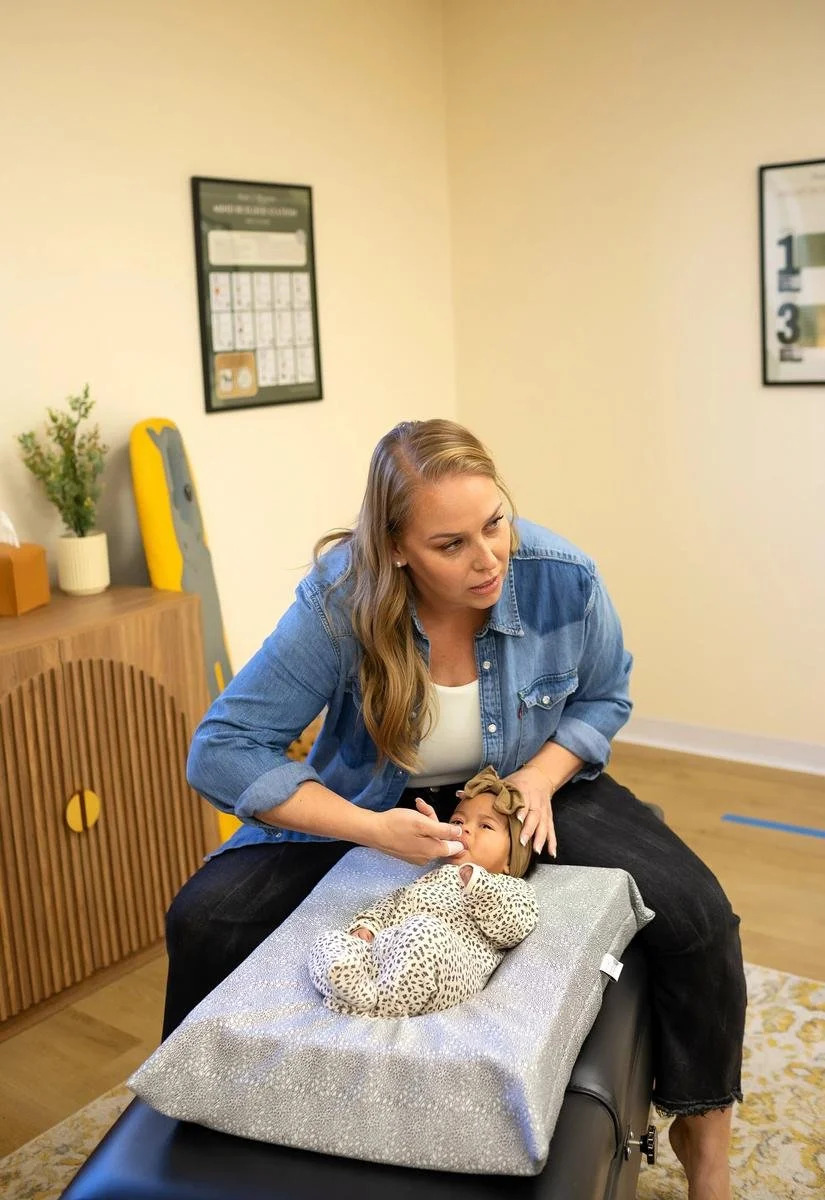
How Chiropractic Supports a Baby's Nervous System
Gentle adjustments provide sensory input through the spine. The goal is to support how the brain receives information from the body and how the nervous system regulates and adapts—not to correct a passive structure or treat a diagnosis.
Chiropractic does not diagnose or treat colic or infant reflux. Crying, feeding changes, or digestive concerns should also be evaluated by your baby's pediatric healthcare provider.
What Parents Can Expect
At your baby's first visit, Dr. Jennifer will take a thorough history — including pregnancy, birth experience, and feeding patterns — followed by INSiGHT neurological scans and a gentle hands-on assessment.
If care is a good fit, your baby's first adjustment may happen that same visit. The adjustment is brief, gentle, and uses only fingertip pressure. Parents often share what they notice between visits, and every baby responds on their own timeline.
Frequently Asked Questions
Can a chiropractor help a colicky baby?
Chiropractic does not diagnose or treat colic. Gentle adjustments provide sensory input through the spine and may support brain-body communication and nervous-system regulation alongside appropriate pediatric care.
How gentle is an adjustment for a baby with colic?
Extremely gentle. We use sustained fingertip pressure — no cracking, twisting, or forceful techniques. Most colicky babies visibly relax during their adjustment.
How quickly do babies respond to chiropractic for colic?
Every baby responds differently, and no change in crying, sleep, or feeding can be guaranteed. Dr. Jennifer will monitor how your baby adapts while encouraging appropriate pediatric evaluation for ongoing concerns.
Is colic related to the nervous system?
Researchers haven't pinned down a single cause of colic. Our approach looks at how your baby's nervous system is adapting, since a regulated nervous system supports rest, feeding, and settling. Your pediatric provider should evaluate ongoing crying to rule out other causes.