Adult soft-tissue care
Shockwave Therapy in Temecula
Noninvasive care for stubborn heel, tendon and soft-tissue discomfort, with a plan tailored to you—including support for fully healed C-section scars.
Sound and pressure waves. Not electricity.
What Shockwave Therapy Actually Is
The name sounds alarming, but nothing electrical is involved. Shockwave therapy, often called ESWT, sends acoustic pulses (bursts of sound and pressure energy) through the skin into a small, specific area of soft tissue.
The goal is to give tissue that has stalled, such as an irritated tendon or thickened fascia, a fresh mechanical stimulus. It is typically considered when a problem has hung around despite rest, stretching or other reasonable care.
It is a local treatment for a local problem. It isn't a whole-body therapy, and it isn't right for everyone, which is why every plan starts with an exam.
How it differs from an adjustment
Adjustments provide gentle sensory input through the spine and body to support brain-body communication and adaptability.
Shockwave uses an applicator to deliver acoustic waves to one patch of soft tissue.
Depending on your exam, you might receive one, the other, or both. See our adult chiropractic care.
Common Reasons to Consider Shockwave Therapy
Common reasons adults look into shockwave. Whether it suits you depends on your exam, and results vary from person to person.
Shockwave is not a general answer for nerve pain or sciatica, and it does not dissolve bone spurs. If one of those is your main concern, we'll talk about other options.
For postpartum parents
Healed C-Section Scars
Months or even years after a cesarean, some parents still notice a pulling sensation, tightness when they stand tall or twist, or tissue around the scar that just doesn't move the way it used to.
For a fully healed scar, shockwave may be one way to work with that tissue gently and gradually, alongside the rest of your postpartum recovery.
Being honest: research on shockwave for scars is still developing, most of it outside C-sections, and benefits vary. This isn't scar removal, and we can't promise a cosmetic change.
Before we consider it
- Your incision is fully healed, with no open areas
- Your OB or surgeon has cleared you
- You are not currently pregnant
- We've talked through what you're feeling and what you hope for
What a Visit Feels Like
No surprises. Here's the shape of it, start to finish.
History & exam
We talk through your symptoms, health history and goals, then examine the area to decide whether shockwave is a reasonable fit, or whether something else makes more sense.
Gel & applicator
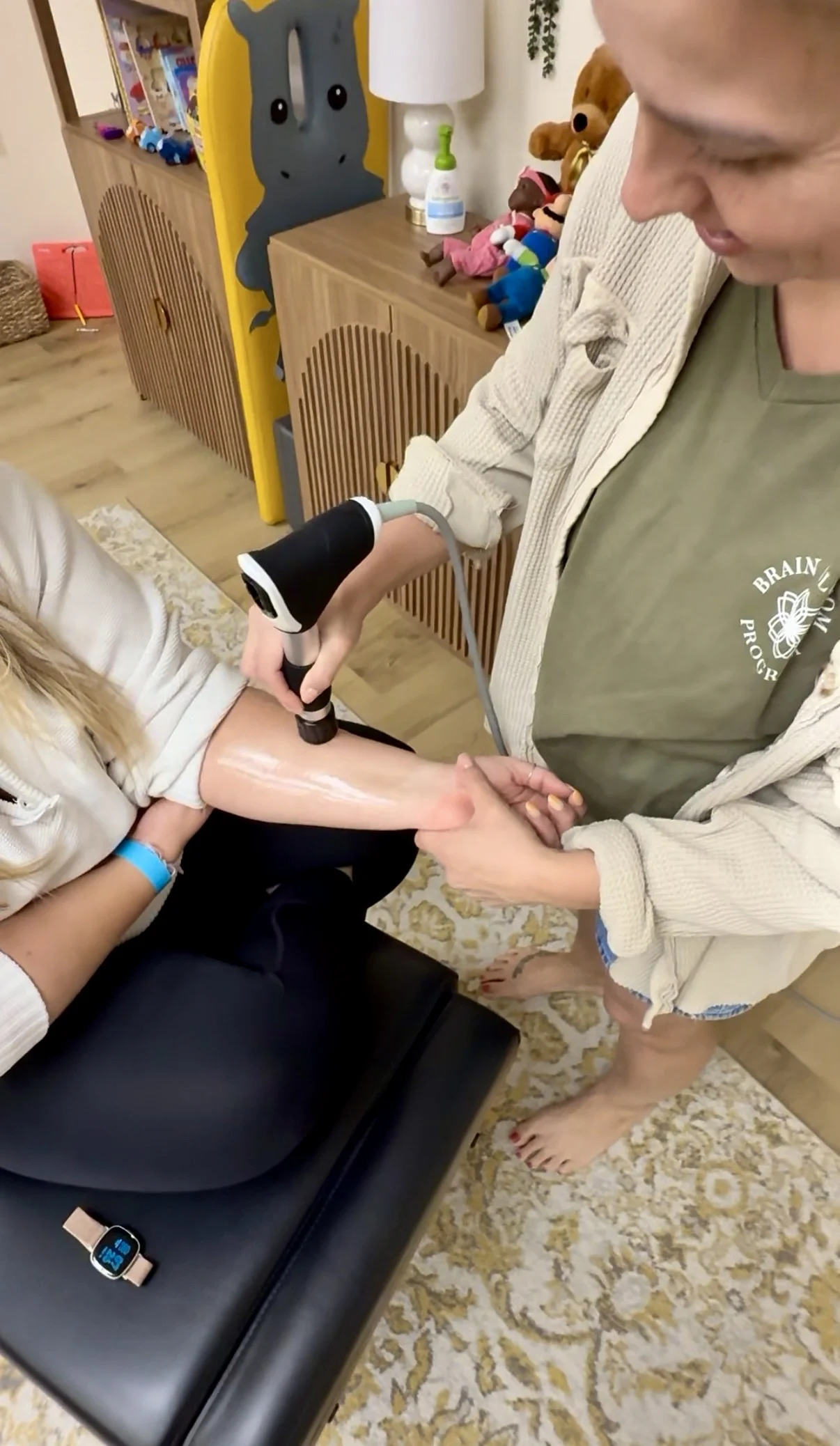
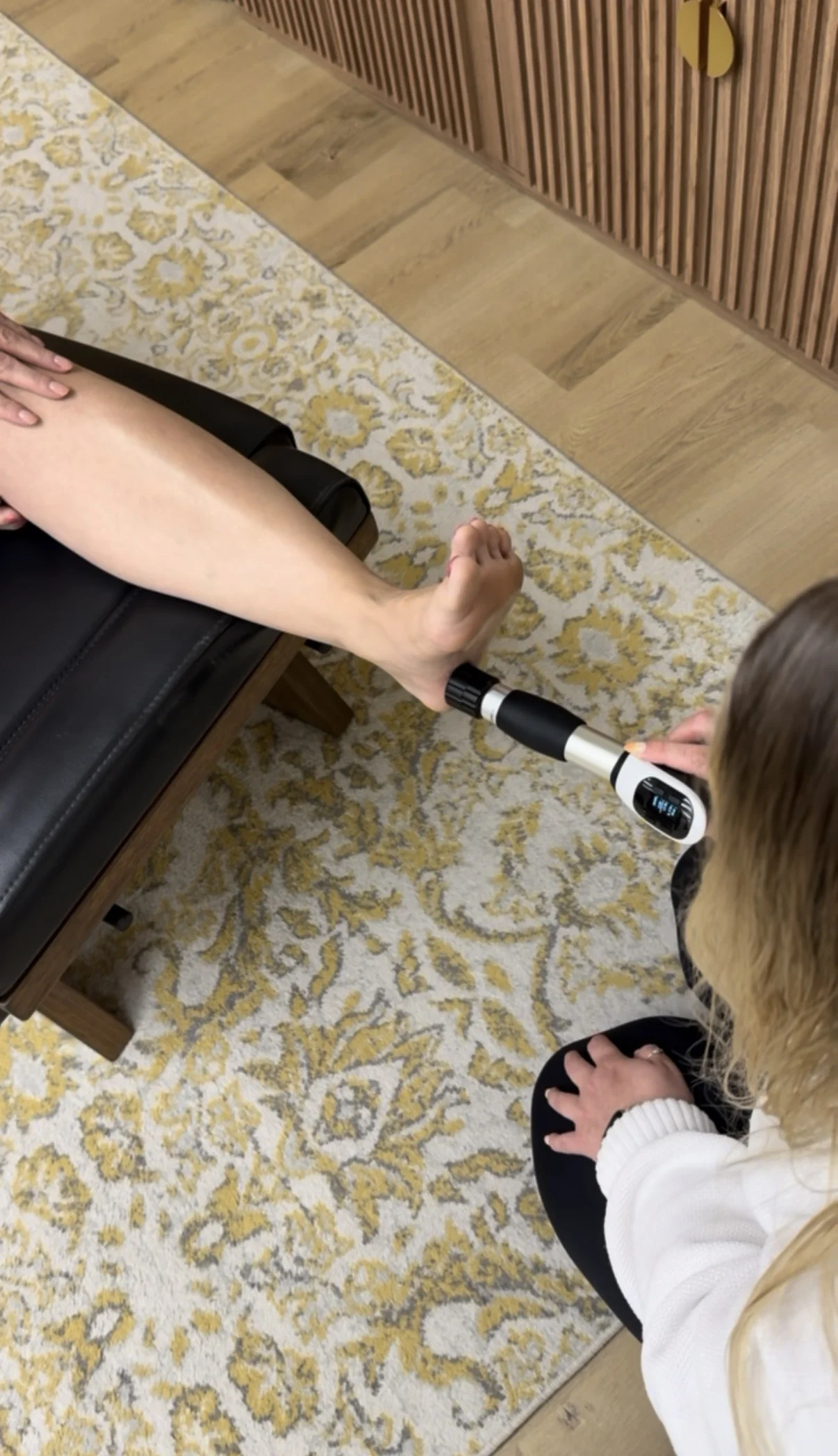
A thin layer of gel goes on the skin, and a hand-held applicator delivers rhythmic acoustic pulses to the targeted tissue.
Adjusted to you
It feels like firm, rapid tapping. It can be uncomfortable over sensitive spots, so intensity is adjusted to your tolerance, and we stop whenever you ask.
Reassess & plan
Treatments are short outpatient visits. Sessions are individualized and we reassess as we go, rather than following a fixed script.
The Expected Course
Care plans typically range from 6–12 visits, though some concerns may require a longer course. Your recommendation is based on your exam and adjusted as we assess your progress.
Aftercare includes progressive loading: gradually building movement and resistance back into the treated tissue, tailored to the area treated and your response. We'll guide you on how to progress. Keep taking any medication as prescribed, and check with your prescriber before changing anything.
Screening & Safety
Your screening is individual. We'll ask about, among other things:
- Pregnancy or possible pregnancy: We do not treat over the abdomen or low back during pregnancy. Treatment elsewhere requires individual assessment to determine whether it is appropriate.
- Infection, open wounds or broken skin in the area
- Cancer in or near the treatment area
- Bleeding disorders or blood-thinning medication
- Recent injections into the area, especially steroid/cortisone injections
- Implants, devices or other relevant medical history
This list isn't exhaustive. Your full history guides the decision.
Possible side effects
Temporary soreness, redness, bruising or swelling in the treated area can happen and usually settle on their own. Serious soft-tissue injury, such as a tendon tear, is uncommon.
Your Initial Exam & Care Plan
Your initial exam is $97. We'll assess your concerns and recommend a care plan tailored to what you're coming in for. We offer package pricing for your care plan and review the full cost with you before you begin.
Not sure where to start? A free 15-minute consult is a low-pressure way to ask questions and discuss whether shockwave is a good fit.
Shockwave Therapy Questions
Take the Next Step
Whether you're looking for answers, seeking relief, or wanting to support your family's nervous system — we're here to help you thrive.